Why day and night should not feel the same
When we talk about germination temperature, most people picture a single number: "this seed likes 22°C." But in nature, a seed almost never sits at a constant temperature. It rests in soil that warms under the afternoon sun and cools sharply at night. This rhythmic rise and fall is called thermal amplitude — the difference between the daily high and the nightly low. For a surprising number of species, that swing is not an inconvenience the seed tolerates; it is a genuine trigger the seed is waiting for.
Think about what a temperature swing tells a seed. A wide day-night difference usually means the seed is near the soil surface, in open ground, in spring or early summer — exactly the moment when light, space and moisture are abundant. A flat, unchanging temperature often signals the opposite: deep burial, dense leaf litter, or the wrong season. By reading amplitude, a seed effectively answers the question "Am I in a good place to grow?" before spending its precious reserves.
The science in plain terms
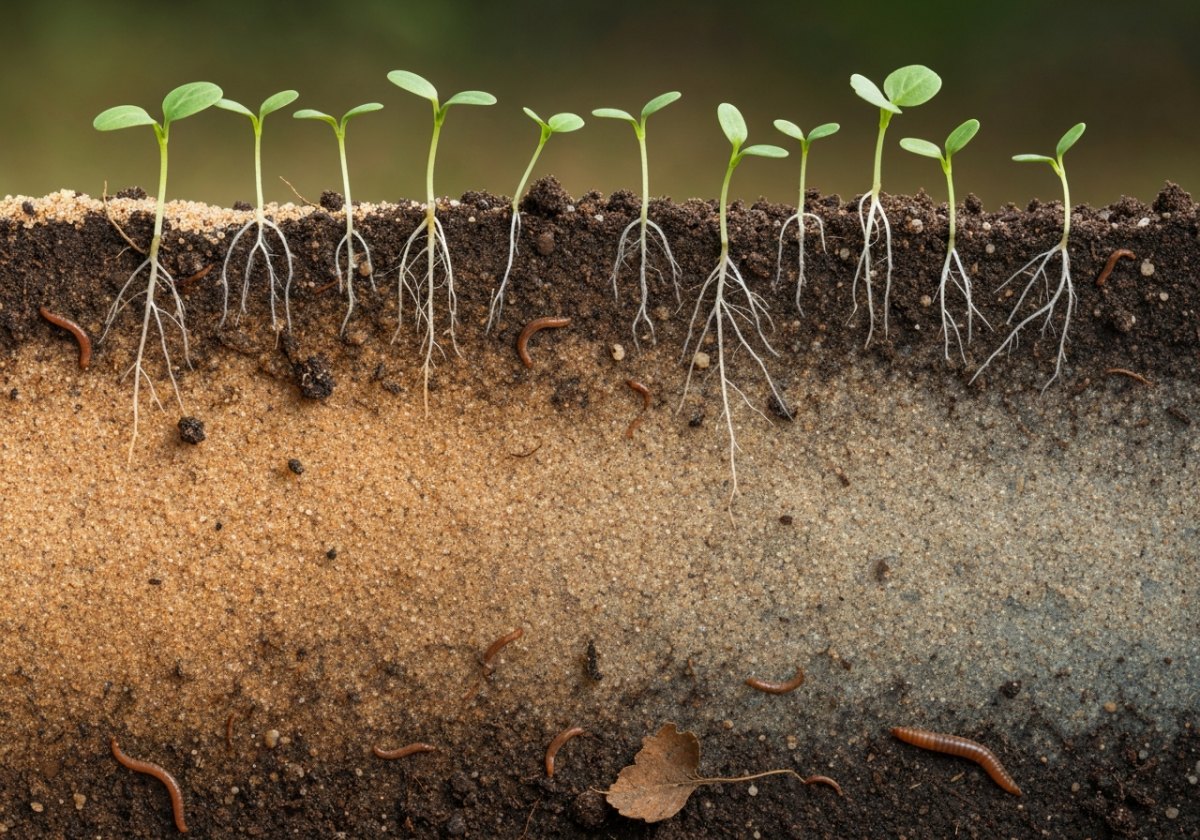
Physiologically, alternating temperatures affect the balance of hormones inside the seed — chiefly by lowering the seed's sensitivity to abscisic acid (the dormancy-keeping hormone) and increasing responsiveness to gibberellins (the growth-go hormone). Fluctuation also improves the membrane and enzyme activity involved in mobilising stored food. In practical terms, a seed given a 10°C swing may germinate faster, more completely, and more evenly than the same seed held at a steady average.
A useful rule of thumb from decades of horticultural trials: a diurnal amplitude of 8–12°C benefits a large fraction of temperate wildflowers, grasses, many alpines and numerous vegetables. Some species need very little (2–4°C); a few demand large swings of 15°C or more. The amplitude matters as much as the average, and sometimes more.
Species that respond strongly to the swing
Not every seed cares, but many rare and ornamental ones do. Here are concrete, well-documented examples to calibrate your expectations:
- Digitalis purpurea (foxglove) — germinates far more evenly with a day/night alternation around 20/12°C plus light on the surface.
- Primula species — many alpines respond to a cool regime with a distinct night drop, often 15/5°C, frequently combined with prior cold stratification.
- Celery (Apium graveolens) — a classic amplitude-dependent crop: 20°C day, 10–12°C night dramatically improves and speeds germination.
- Nicotiana and many small-seeded ornamentals — benefit from 22/12°C alternation with light.
- Native prairie grasses (e.g. Andropogon, Panicum) — commonly evaluated at 30/15°C alternating regimes in seed labs.
- Betula (birch) and many pioneer trees — the swing signals a gap or clearing where light reaches the ground.
How to create a thermal swing at home
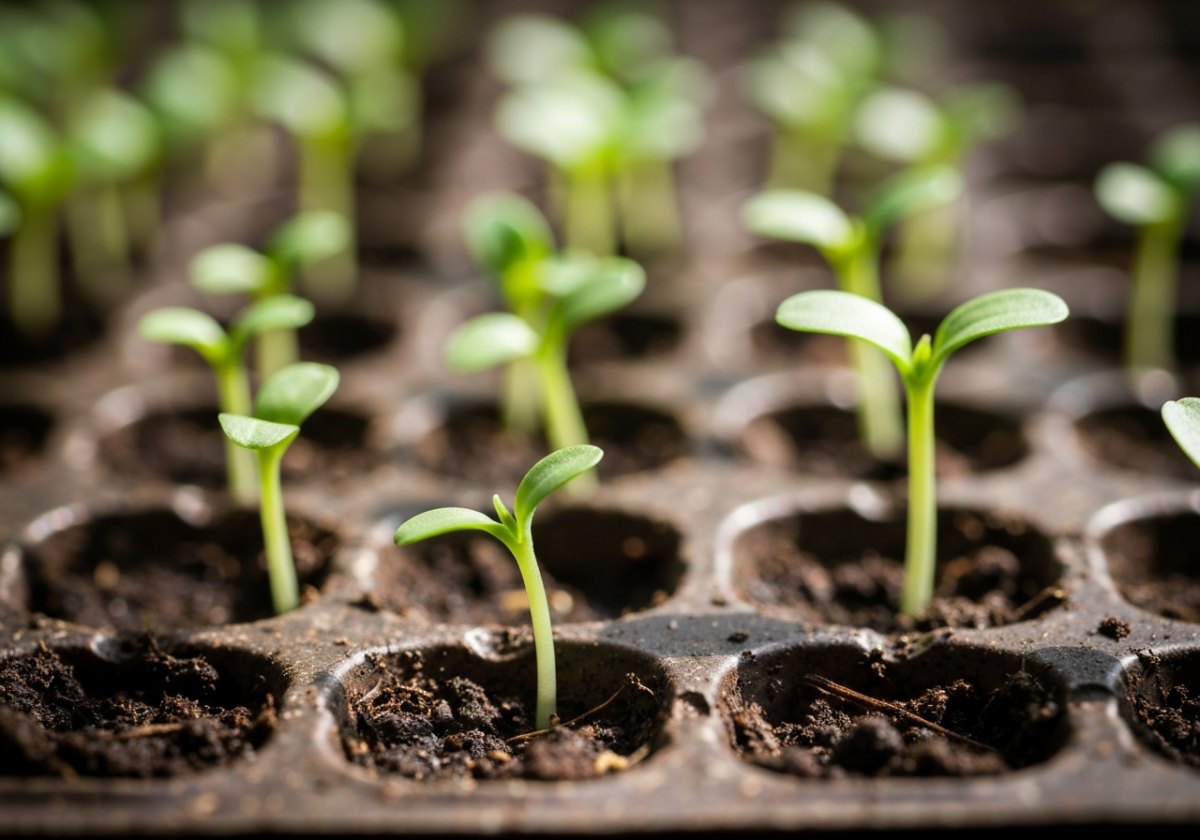
You do not need laboratory equipment. You need a warm spot, a cool spot, and a habit. The goal is a reliable daily rhythm, not perfection to the degree.
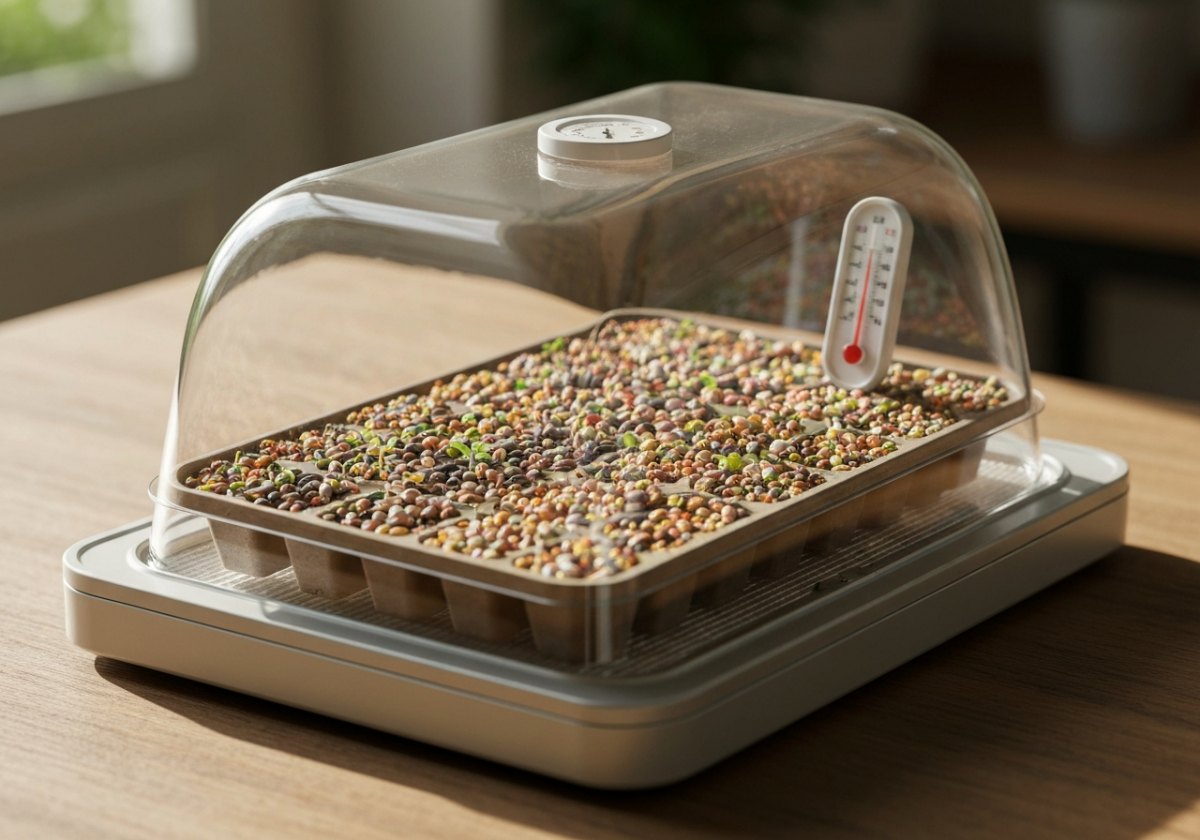
- Sow into a clear, covered tray so you can monitor moisture without opening it constantly. Keep the medium evenly damp — never waterlogged.
- Place the tray in a warm location during the day: near a heat mat set to ~20–22°C, a sunny windowsill, or the top of a warm appliance. Aim for 8 hours warm.
- Each evening, move the tray to a consistently cooler place — an unheated room, a porch, or simply switch off the heat mat with a plug timer. Target 10–14°C overnight.
- Use a cheap min/max thermometer inside the tray zone for one week to learn your real highs and lows. Adjust locations until the swing sits near 8–12°C.
- Once seedlings emerge, gradually reduce the swing and stabilise conditions so tender roots and cotyledons are not stressed by extremes.
The role of the refrigerator (and where amplitude fits)
People sometimes confuse thermal amplitude with cold stratification. They are different tools. Stratification is a prolonged cold, moist period (often 2–8°C for 4–12 weeks) that breaks winter dormancy. Amplitude is a daily swing applied during the germination window itself. Many species want both in sequence: first weeks of cold in the fridge, then a move to a warm-by-day, cool-by-night regime to actually sprout. Foxglove, several primulas, and many perennials follow exactly this pattern.
Common mistakes and how to avoid them
- Letting the medium dry during the warm phase — heat accelerates evaporation, and a dried-out imbibed seed frequently fails. Check daily.
- Confusing average with amplitude — a steady 16°C is not the same as swinging between 20 and 12, even though both average 16.
- Applying big swings after emergence — young seedlings prefer stability; save the wide amplitude for the germination stage.
- Forgetting light — many amplitude-responsive seeds are also light-responsive, so sow small seed on the surface, not buried at 1–2 cm.
Reading the plant's own calendar
The deepest lesson of this chapter is empathy for the seed. A wide day-night swing is a message written in physics that the seed decodes as biology: open sky, spring soil, a real chance. When you reproduce that rhythm on a windowsill or a heat mat, you are speaking the seed's native language rather than shouting a single flat number at it.
A seed does not measure the temperature. It measures the difference — and in that difference reads the season.— Quinta dos Ouriques University
In the next chapters we will layer moisture, light and oxygen onto this foundation. But keep amplitude in your toolkit: for many of the rare species you will attempt, the humble act of letting nights be colder than days can be the single most useful adjustment you make.