Why temperature is the master switch
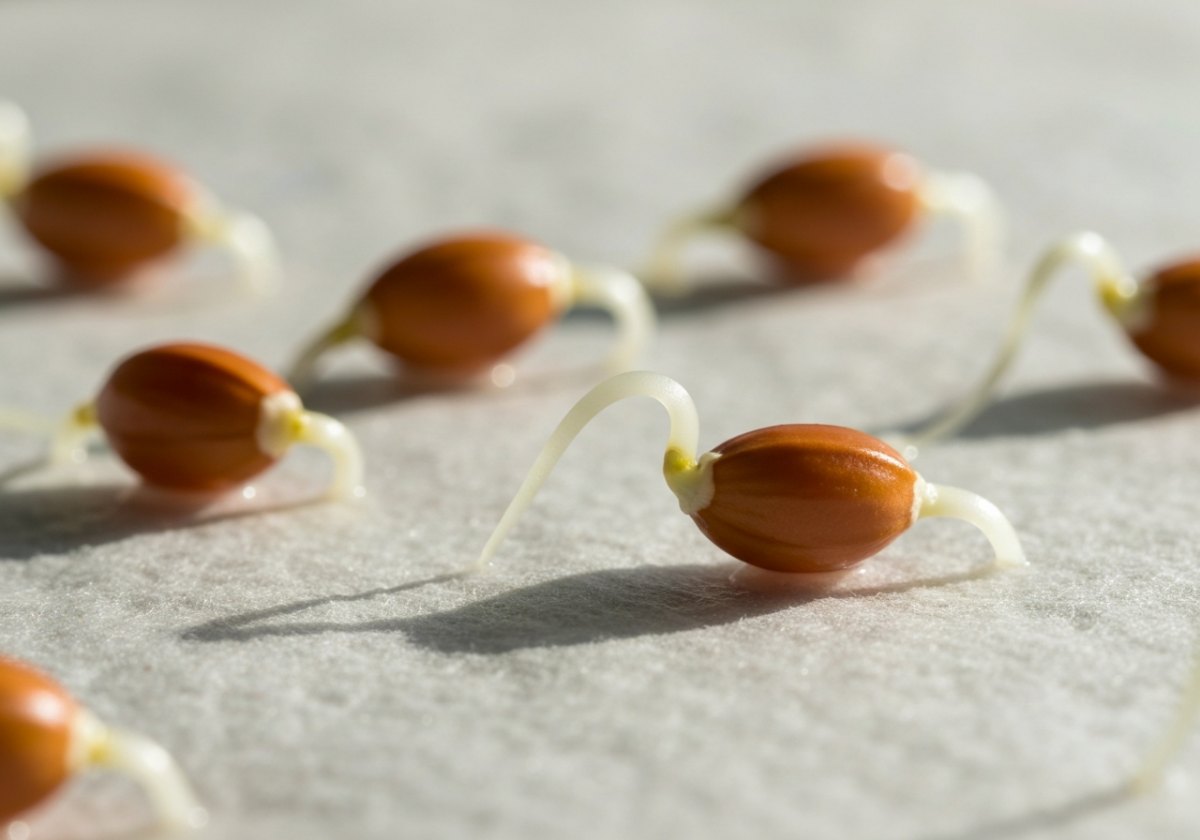
If moisture is the invitation and oxygen is the air in the room, temperature is the master switch that decides whether a seed even shows up to the party. Inside every seed is a tiny biochemical factory: enzymes that break down stored starches, oils and proteins to feed the growing embryo. Enzymes are exquisitely sensitive to warmth. Too cold and they crawl; too hot and they denature and stop working altogether. Get the temperature right and germination that might take a month can happen in a week.
Most gardeners obsess over water and light and treat temperature as an afterthought. In truth, for a huge range of species, temperature is the single most decisive factor in whether a seed germinates at all — and how quickly, how evenly, and how strongly the seedling emerges.
The three temperatures every seed has
Botanists describe germination temperature using three landmarks, sometimes called the cardinal temperatures:
- Minimum — below this, the seed simply sits there. It won't die, but nothing happens. For tomatoes this is around 10 °C; for peppers closer to 15 °C.
- Optimum — the sweet spot where germination is fastest and most uniform. For most warm-season vegetables this is roughly 24–29 °C.
- Maximum — above this, germination slows again and then stops. Push past it and you cook the embryo. Lettuce, for instance, refuses to germinate above about 28 °C, a phenomenon called thermodormancy.
Notice the optimum is not the middle of the range — it usually sits closer to the maximum. This is why a warm 26 °C often beats a cautious 18 °C by a wide margin, and why a windowsill that feels 'fine' to your hand may be far too cold for the seed.
Real numbers for real seeds
Here are optimum soil temperatures for germination that you can actually plan around. Remember: this is the temperature of the growing medium, not the air, and not the room.
- Tomato (Solanum lycopersicum): 24–27 °C, emerging in 5–7 days.
- Chilli and sweet pepper (Capsicum): 27–30 °C, often 10–14 days; below 20 °C they sulk badly.
- Aubergine/eggplant: 25–30 °C, 7–14 days.
- Basil: 21–25 °C, 5–7 days.
- Cucurbits (cucumber, melon, courgette): 25–32 °C, 3–6 days — some of the fastest of all.
- Lettuce: 15–20 °C; keep it cool or thermodormancy strikes.
- Brassicas (cabbage, kale, broccoli): 18–25 °C, 4–7 days.
- Parsley and celery: cool 15–20 °C, slow at 2–3 weeks.
- Many alpines and hardy perennials: germinate at 10–15 °C, often after a cold spell.
Air temperature versus soil temperature
This is the mistake that costs more failed sowings than any other. A room might read a pleasant 21 °C on the wall thermometer, but a tray of damp compost sitting on a cold windowsill can be 4–6 °C colder than the air, because evaporation cools it constantly and the cold glass draws heat away. The seed lives in the medium, not in the air. Always measure where the seed actually is.
Warmth from below: bottom heat
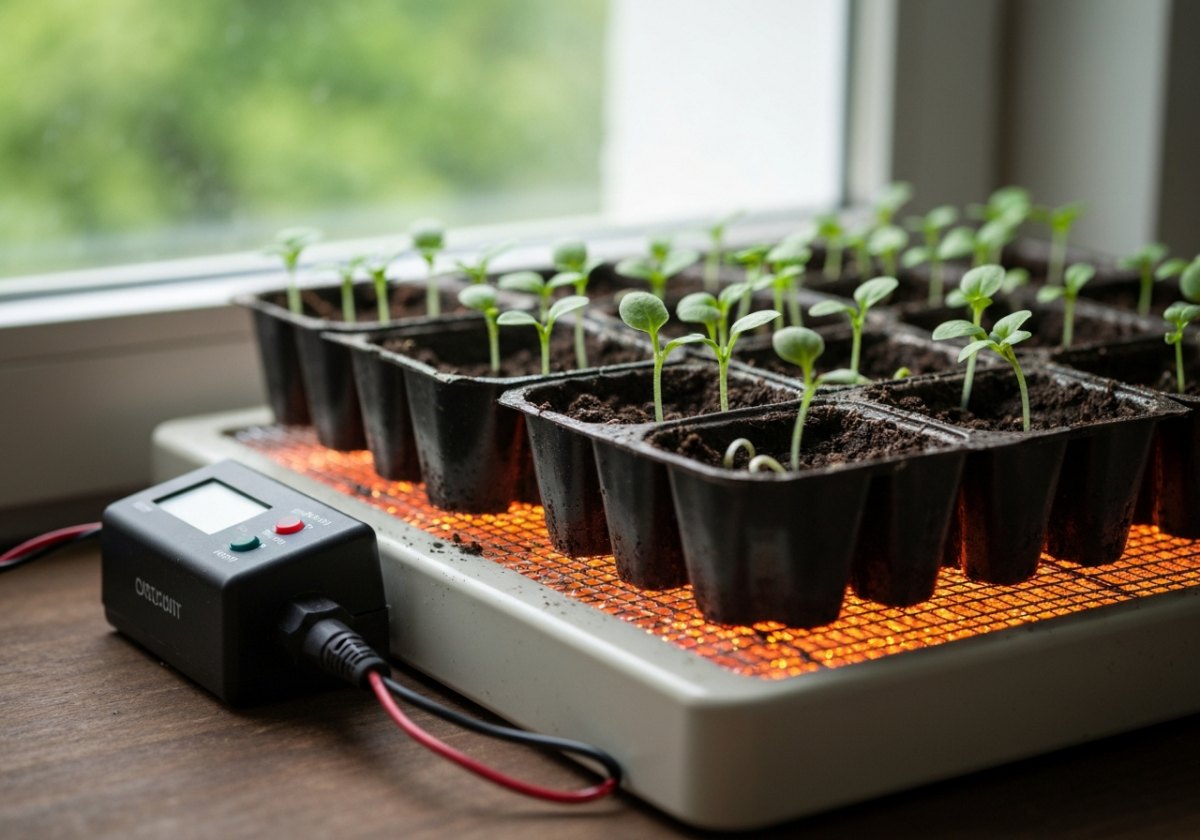
Seeds respond far better to warmth applied from beneath than from above. Bottom heat warms the root zone, drives the radicle downward, and keeps the surface slightly cooler and less prone to fungal problems. A germination heat mat under a thermostat is the single best investment a serious grower can make.
- Set the mat's thermostat probe against the soil surface or, better, inside the medium at seed depth.
- Aim for the species' optimum — say 27 °C for chillies — not 'as hot as possible'.
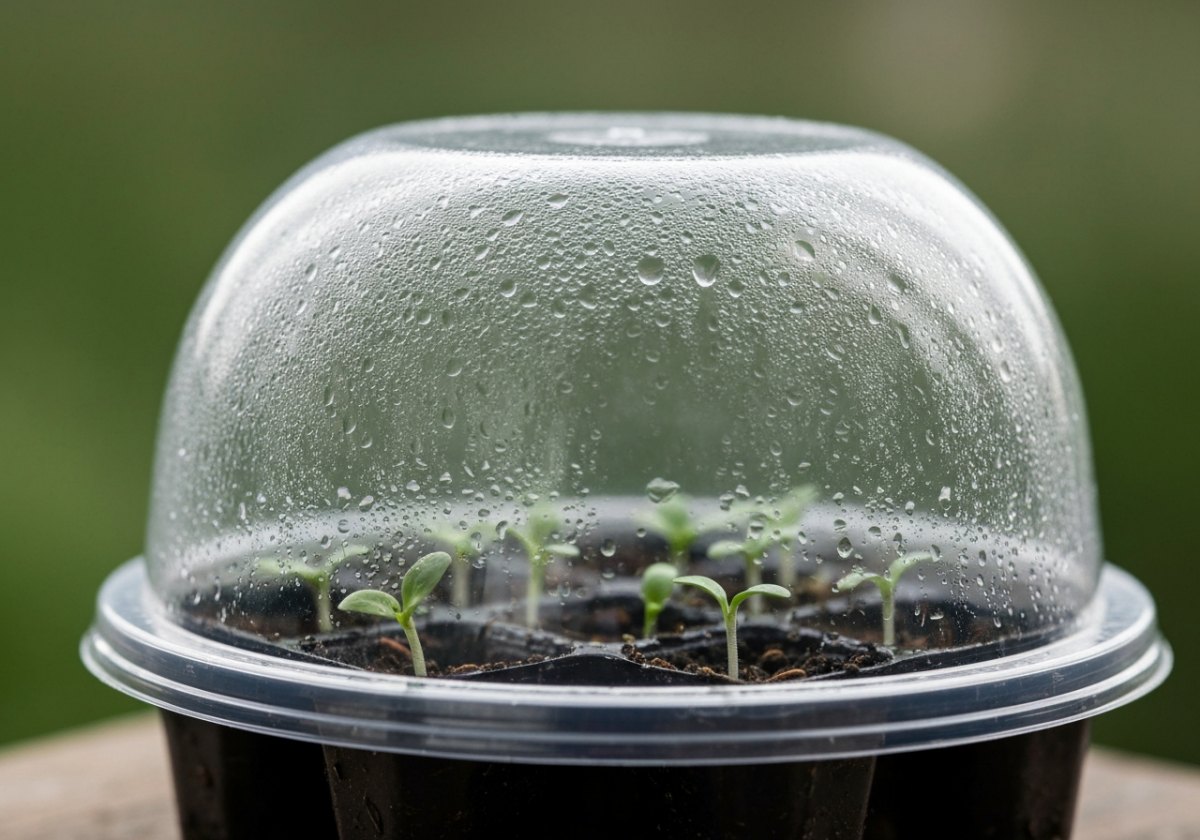
- Cover the tray with a clear humidity dome to hold both warmth and moisture.
- Check daily and remove the dome and mat the moment the first seedlings appear, or they will stretch and rot.
- In a cool house, a mat can raise soil temperature 5–10 °C above room ambient — often the exact margin you need.
The power of a day-night swing
A great many seeds germinate best not at a flat temperature but with a daily fluctuation. In nature, bare soil that warms in the sun and cools at night signals to a seed that it is near the surface, in the open, with light ahead — exactly where a seedling wants to be. A swing of roughly 10 °C, for example 30 °C by day and 20 °C at night, dramatically improves germination in many wildflowers, native grasses and species like celery and some primulas.
You can create this deliberately: run the heat mat on a timer that switches off overnight, or simply move trays to a cooler spot after dark. If your seeds are stubbornly refusing to sprout at a constant temperature, a diurnal swing is one of the most underused tricks available.
When cold is the point: stratification
Not all warmth is warm. Many temperate and alpine seeds — apples, roses, many maples, lavender, echinacea, hellebores — carry a built-in dormancy that is only broken by a spell of cold. This is cold stratification, and it mimics winter. Without it, these seeds may lie inert for a year or more.
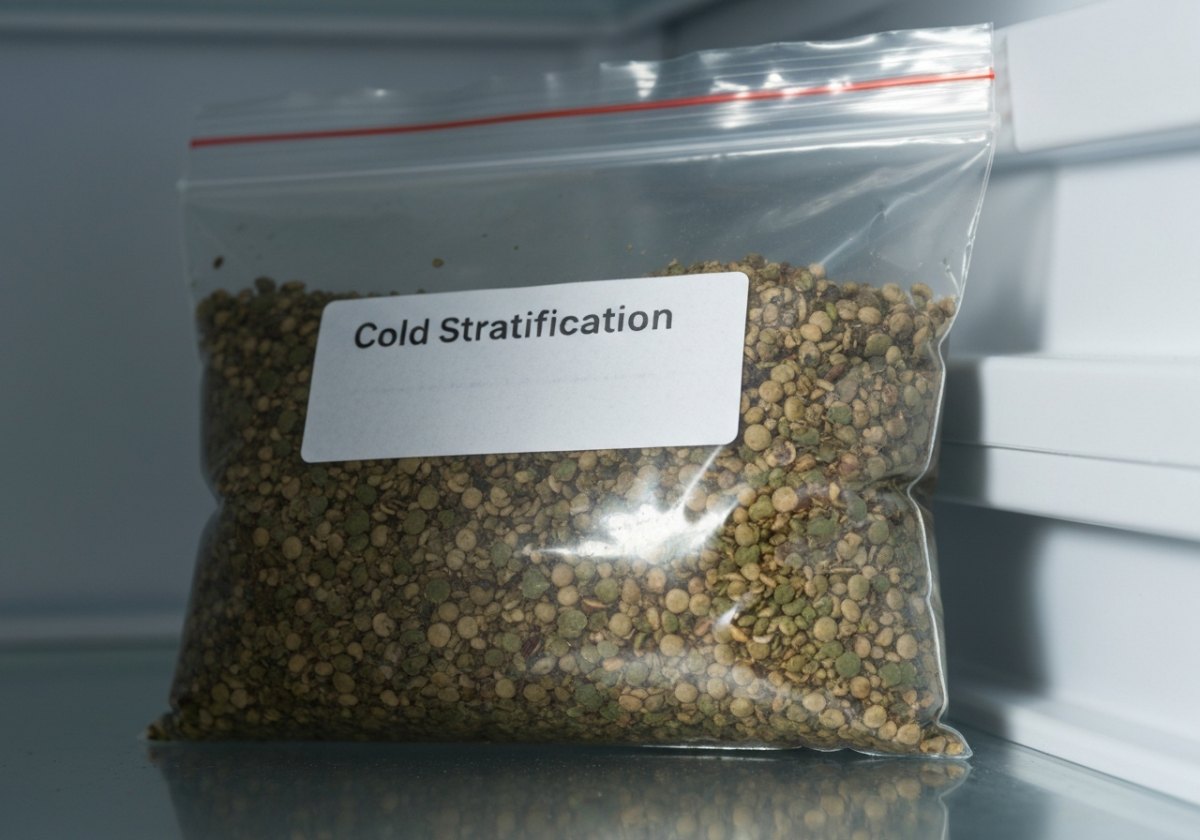
- Mix seeds with barely-moist vermiculite, sand or a damp paper towel — moist, never wet.
- Seal in a labelled zip bag or small container.
- Place in the refrigerator at 1–5 °C (the vegetable drawer is ideal, not the freezer).
- Hold for the species' required period: often 4–12 weeks. Echinacea needs about 4 weeks; many roses and tree seeds need 8–12.
- Check weekly for mould or early sprouting; sow at the first sign of a radicle.
After the cold period, these seeds still need warmth to actually germinate — so the sequence is cold first, then warmth. Some species even require a warm period, then cold, then warm again (a warm-cold-warm cycle common in peonies and some lilies). The principle throughout is the same: temperature is a language, and you are speaking the season the seed is waiting to hear.
Putting it together
Treat temperature as something you measure and control, not something you hope for. Know your species' optimum, measure the soil rather than the air, warm from below, consider a day-night swing for the stubborn ones, and give the winter-adapted seeds their spell of cold. None of this guarantees a result — living seeds always carry their own history and variability — but it stacks the odds firmly in your favour, and it turns germination from guesswork into something you can genuinely repeat.
The seed knows what season it is by how warm it is. Your job is simply to tell it the truth.— Quinta dos Ouriques University