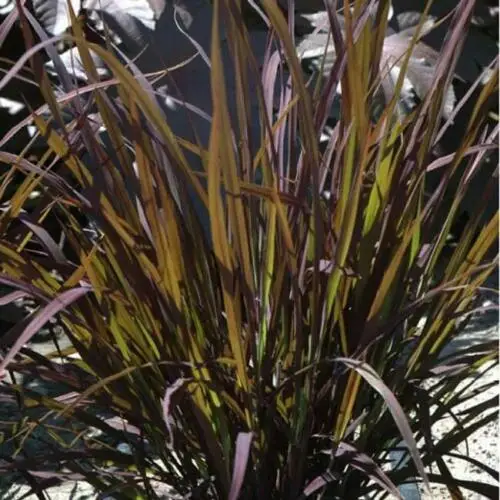
Why some seeds wait for fire
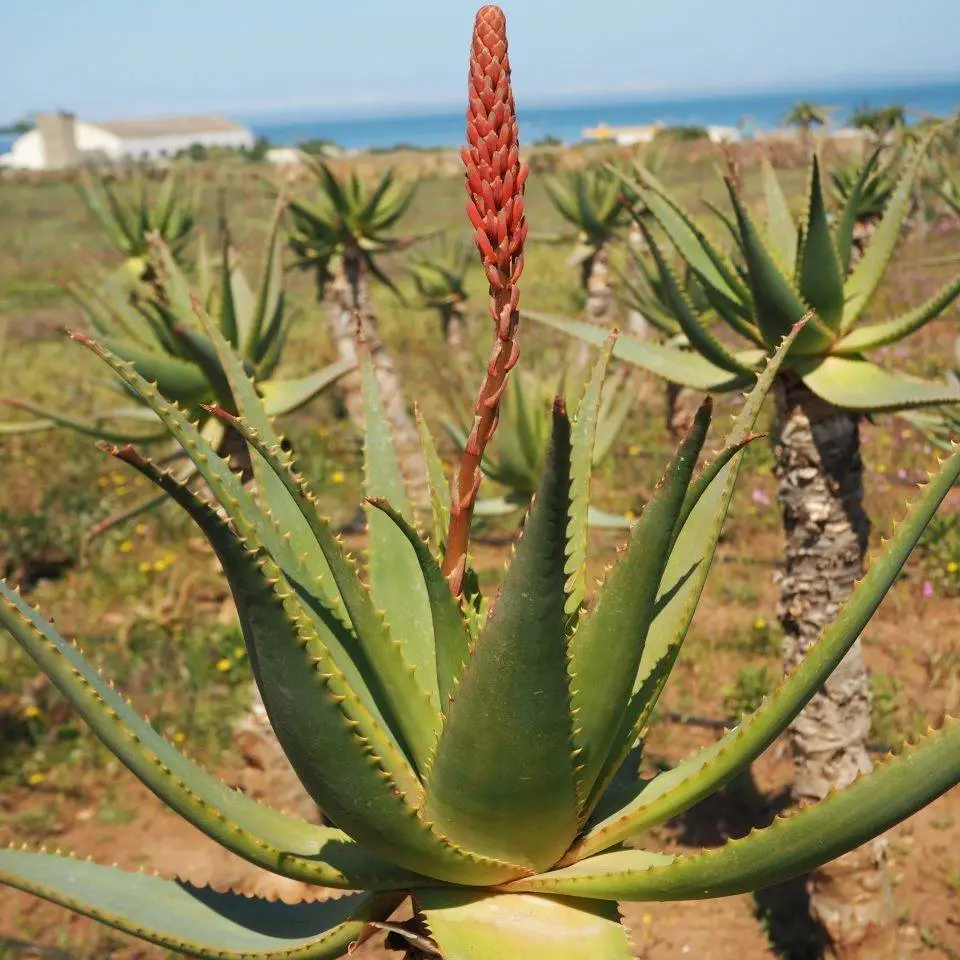
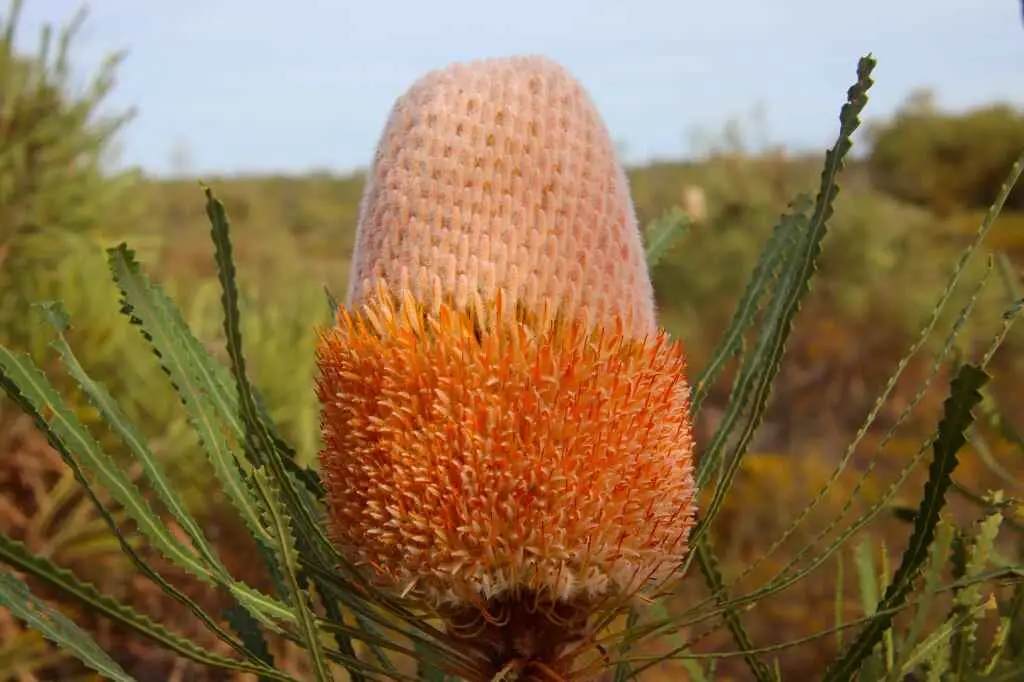
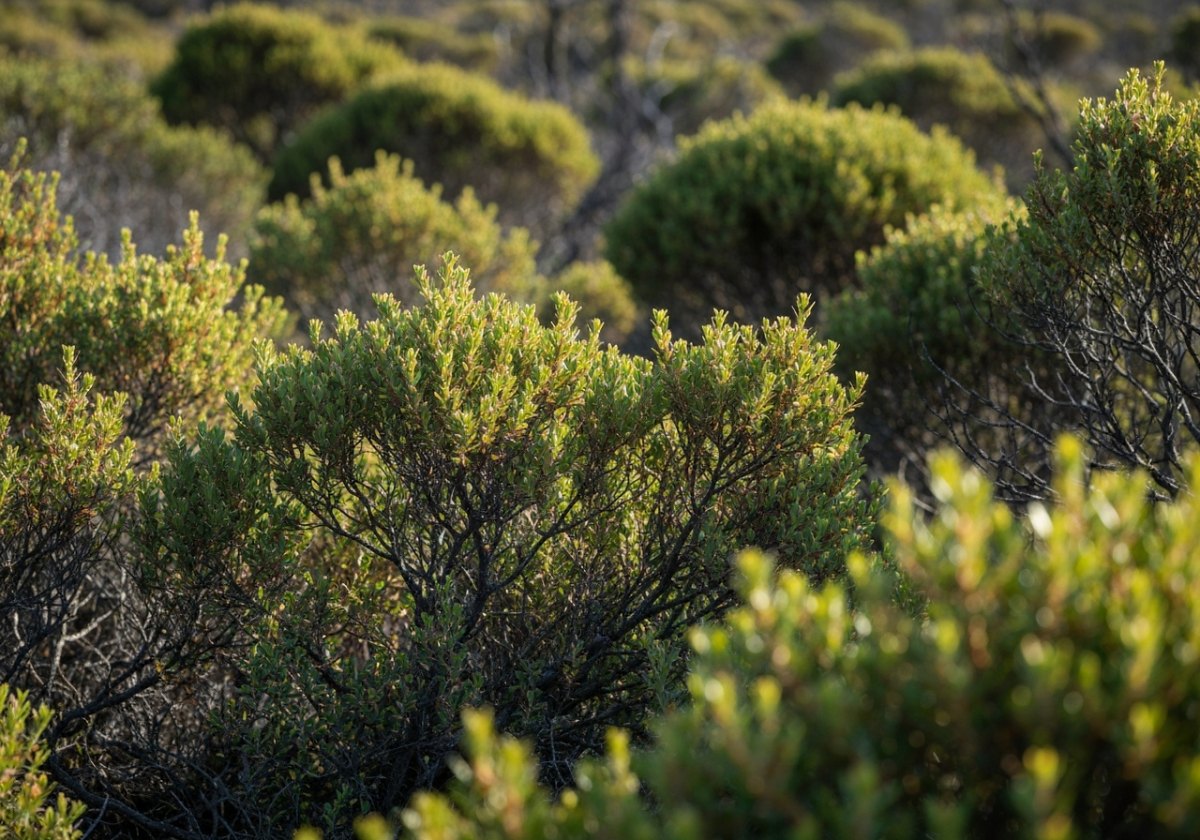
In fire-prone landscapes — the South African fynbos, the Australian bush, the Californian chaparral, and our own Mediterranean maquis here in Portugal — many plants have evolved a remarkable strategy: their seeds refuse to germinate until they detect that a fire has passed. This makes perfect ecological sense. A wildfire clears competing vegetation, releases a flush of nutrients into the ash, and opens the canopy to light. The moment immediately after a burn is the single best time for a young seedling to establish itself. So these seeds sit patiently in the soil seed bank — sometimes for decades — waiting for the unmistakable chemical and physical signals that fire has come and gone.
For the home germinator, this is both a challenge and an opportunity. If you simply sow these seeds in a pot of compost and wait, most will do nothing. But once you understand the specific triggers involved, you can recreate them safely on a windowsill or in a greenhouse — no bushfire required.
The two ingredients: heat and smoke
Fire delivers two quite different signals, and different species respond to one, the other, or both. It is essential to know which your seed needs before you treat it.
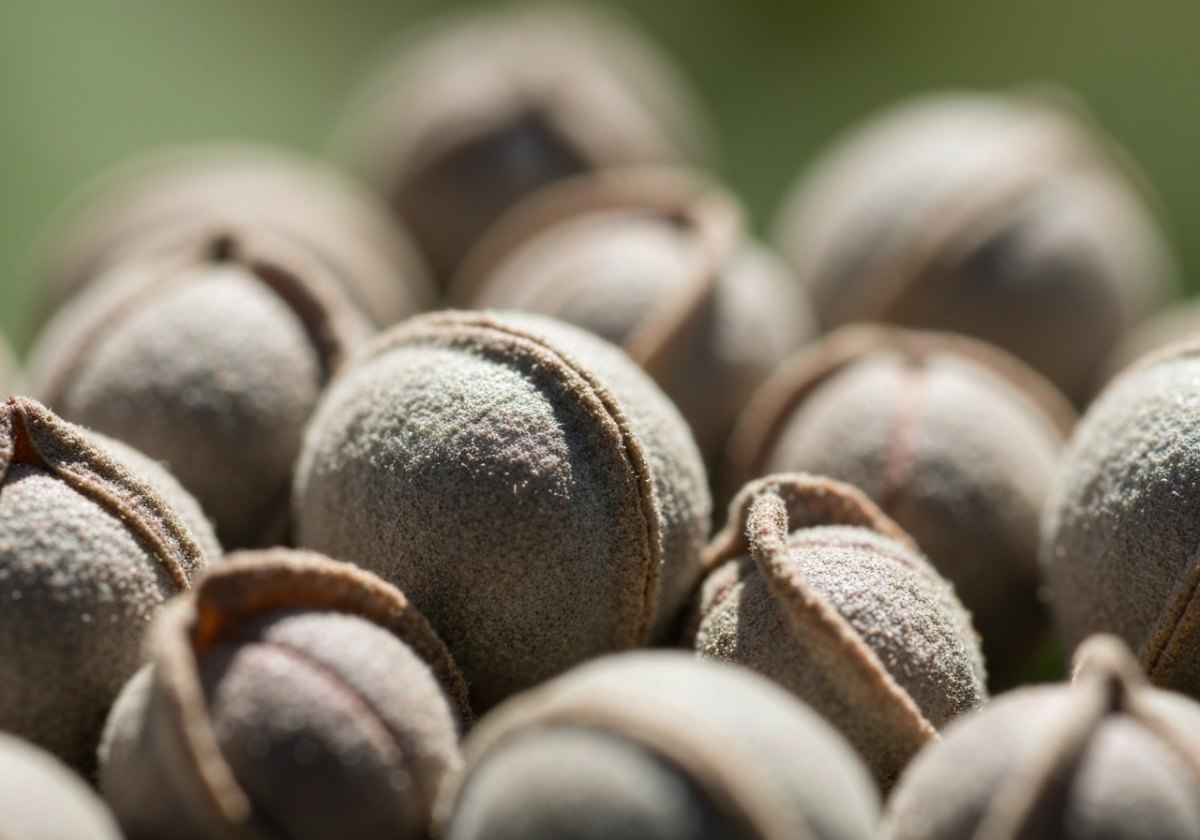
- Heat shock — a brief pulse of high temperature that cracks or weakens a hard, waterproof seed coat, allowing water to enter. This is common in the legume family (Fabaceae) and in many *Acacia*, *Ceanothus* and *Cistus* species.
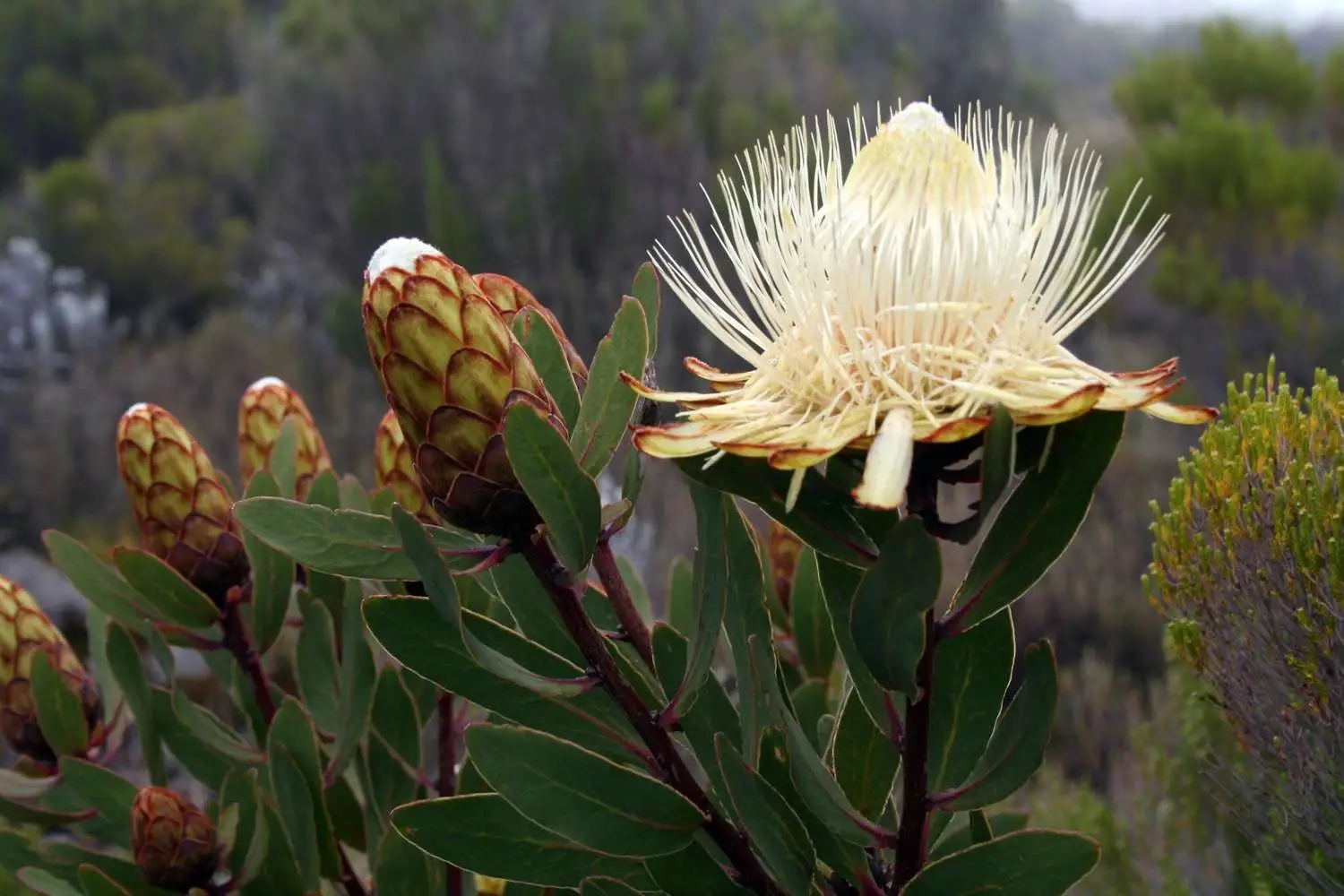
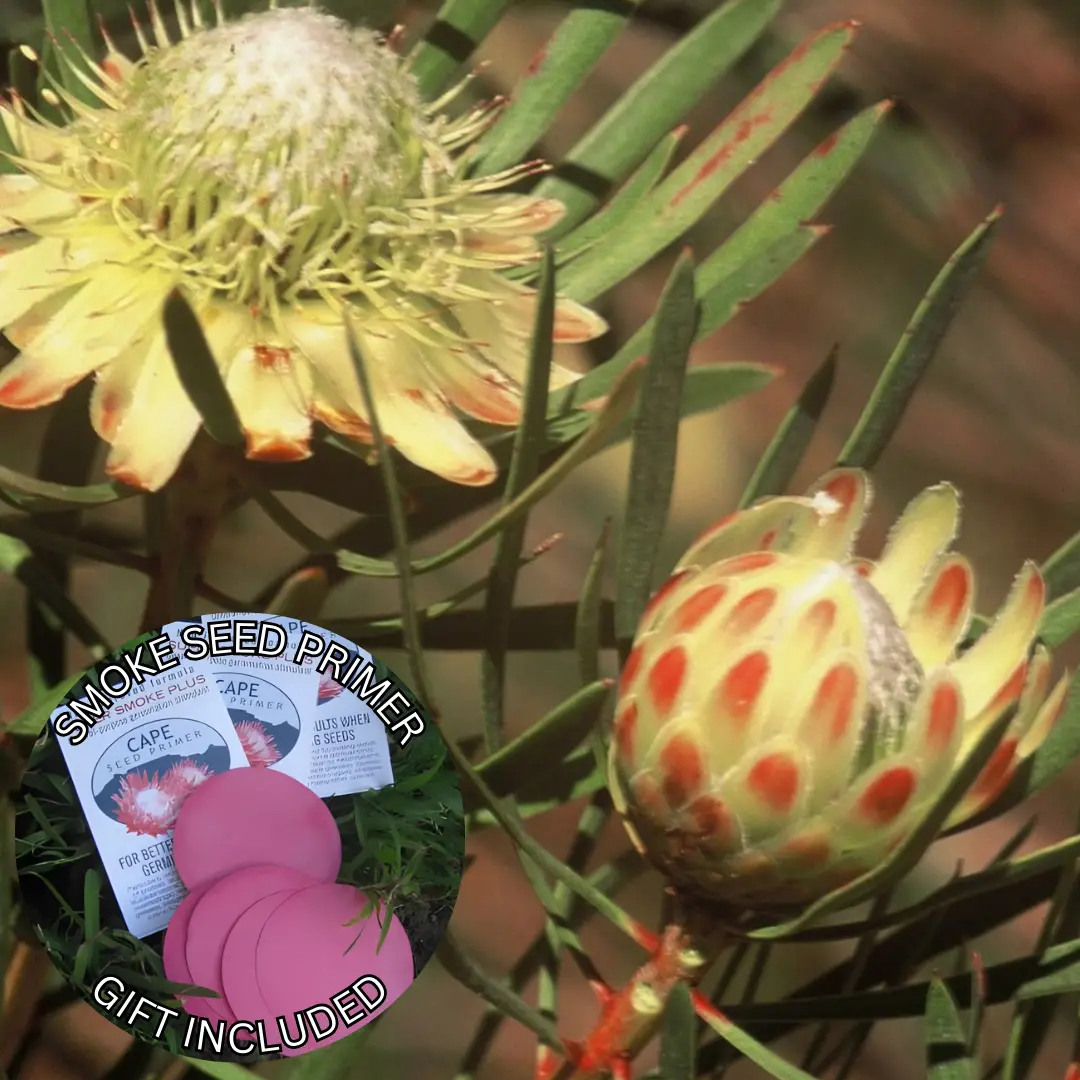
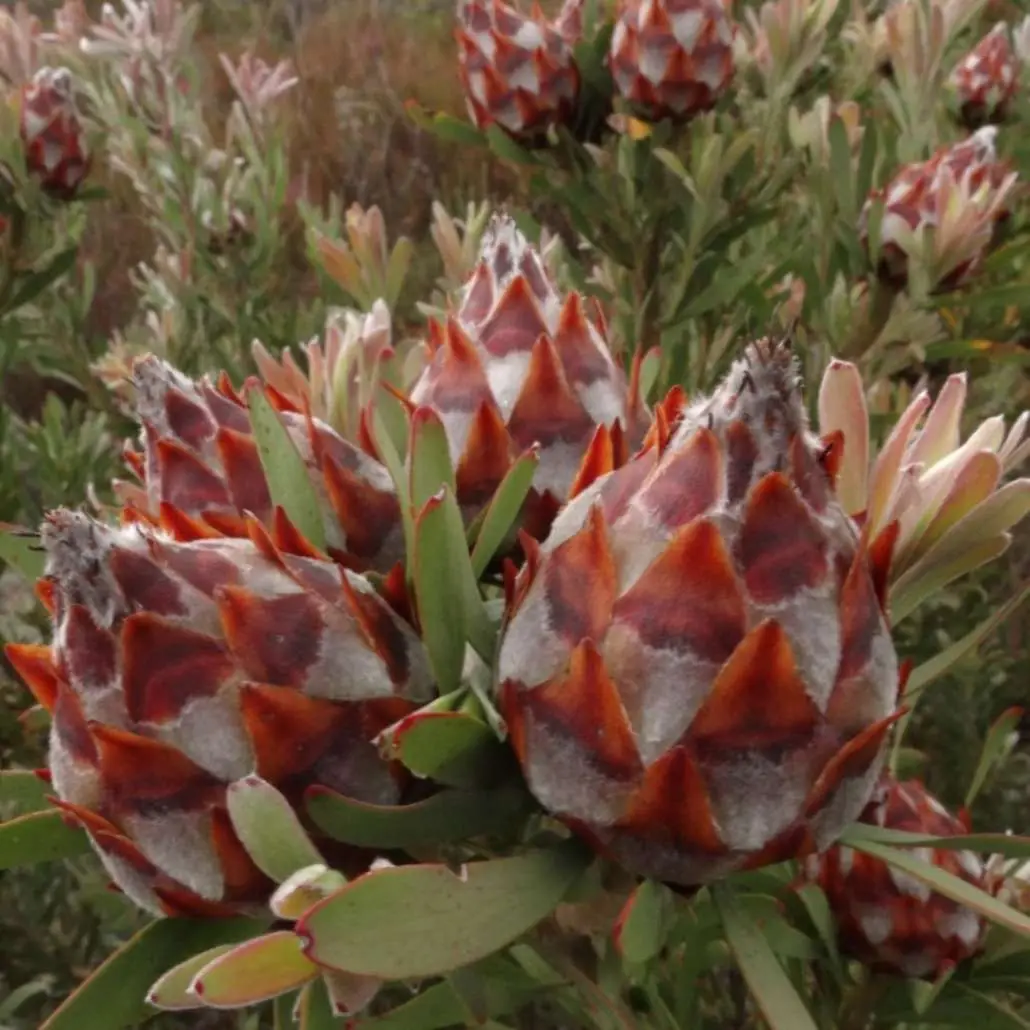
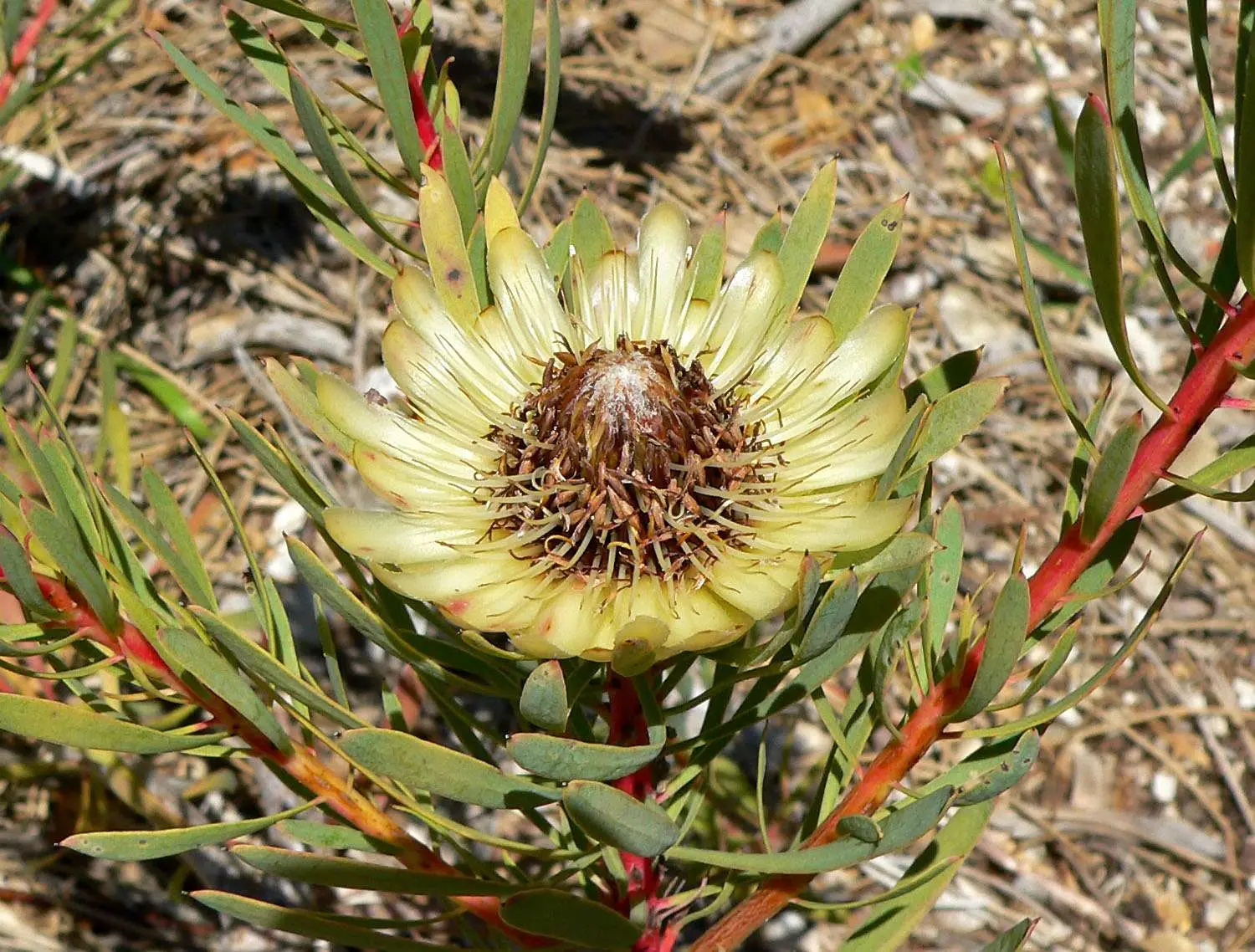
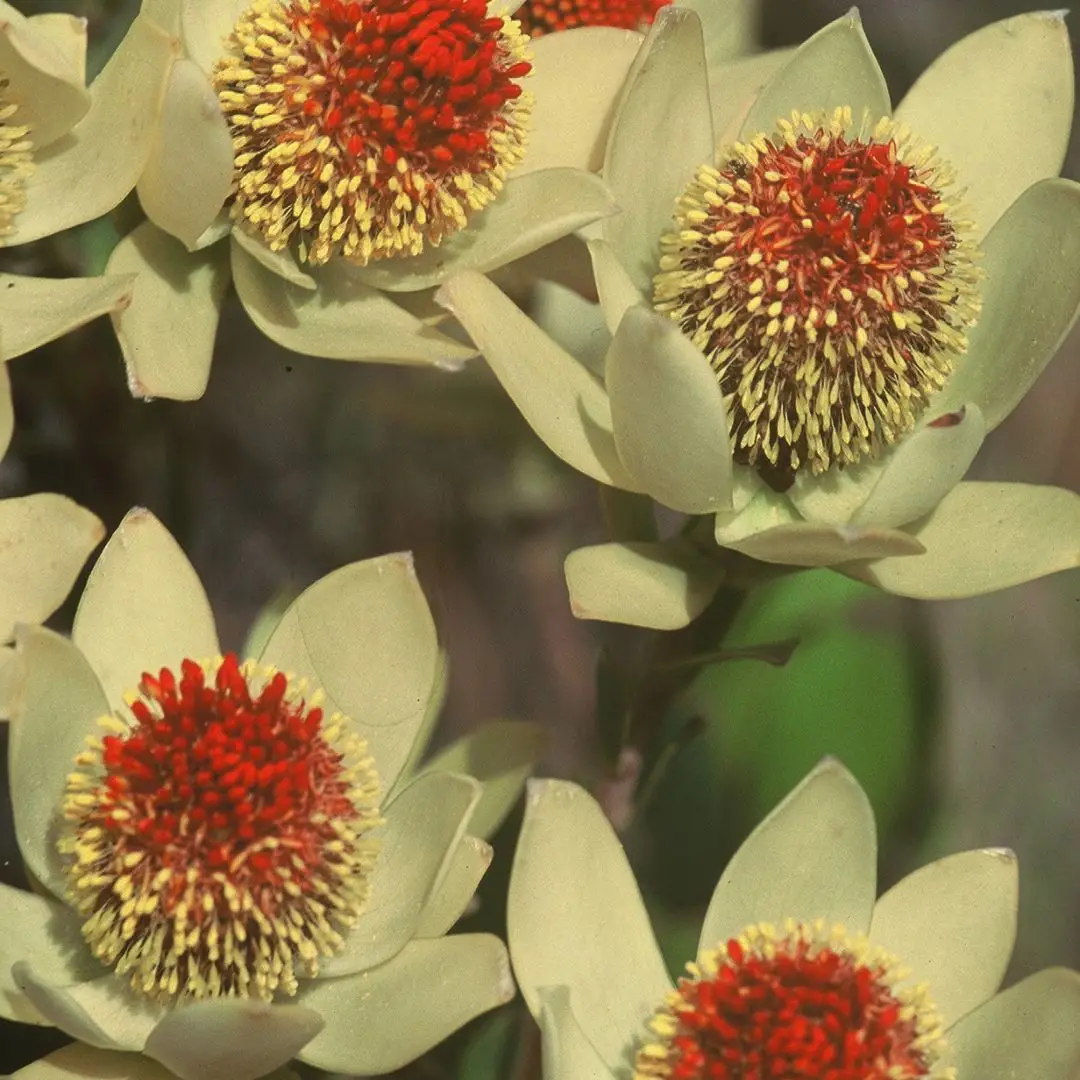
- Chemical smoke cues — soluble compounds in smoke and charred plant material that signal 'a fire has passed'. The key active molecules are the karrikins (especially karrikinolide, KAR1) and, in some species, nitrogen oxides. These work on the embryo's germination machinery rather than on the seed coat. Many *Protea*, *Leucadendron*, *Restio*, *Actinotus* (flannel flower) and countless fynbos species need this cue.
Some seeds — for example many *Cistus* (rock roses), so familiar on Portuguese hillsides — respond primarily to heat, because their dormancy is physical (a hard coat). Others, like most *Proteaceae*, are physiologically dormant and respond to smoke chemistry. A good number want a combination: a heat pulse followed by exposure to smoke water.
Method 1: Dry heat treatment
Heat treatment mimics the fire's temperature pulse. The goal is to crack the seed coat without cooking the living embryo inside. In nature, soil buffers the temperature: seeds a few centimetres down might experience 60–100 °C for a short time even when the surface reaches 300 °C or more. We aim for that buffered range.
- Preheat a domestic oven to a stable 90–100 °C (use an oven thermometer — dials are often inaccurate by 15–20 °C).
- Spread the seeds in a single layer on a baking tray lined with paper.
- Heat for 5 minutes for delicate seeds, up to 10 minutes for very hard-coated species such as some *Acacia*. Do not exceed this; embryos die quickly above about 120 °C.
- Remove and allow to cool to room temperature.
- Sow immediately, or soak in room-temperature water for 12–24 hours first. Seeds that swell visibly have taken up water and are ready — this is your best indicator of success.
Method 2: Smoke cues
You have three practical routes to deliver smoke chemistry, in ascending order of convenience: physical smoking, home-made smoke water, and commercial products such as smoke-primed discs or granular smoke.
Smoke water
- Burn a small quantity of dry plant material — straw, dead leaves, fine twigs — in a metal container, aiming for a smouldering, smoky fire rather than a hot, clean flame.
- Bubble the smoke through a container of water, or trap smoke over water so the soluble compounds dissolve. Even simpler: collect fresh cool ash and steep it in water overnight.
- Filter to remove solids. The resulting 'smoke water' is a stock solution.
- Dilute roughly 1 part smoke water to 9 parts clean water (1:10). Concentrations that are too strong can inhibit rather than promote germination.
- Soak the seeds in the diluted solution for 12–24 hours, then sow onto your normal medium.
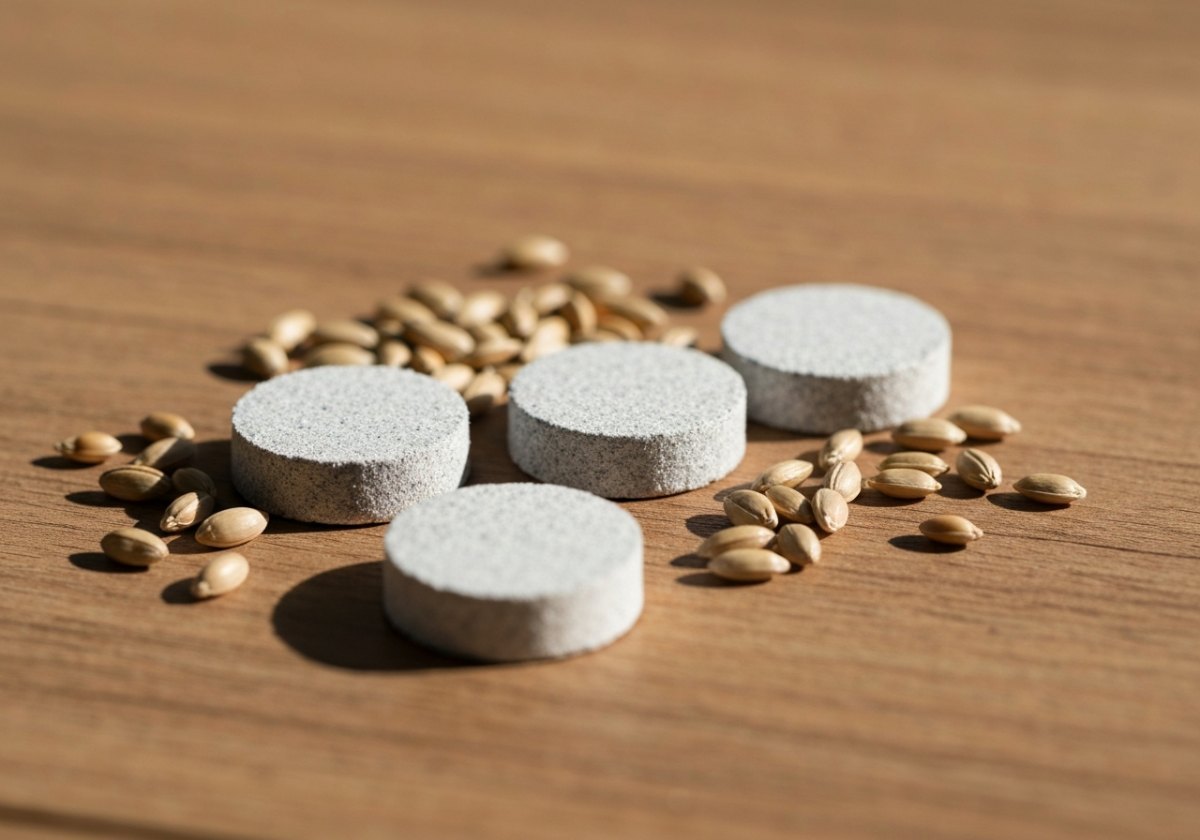
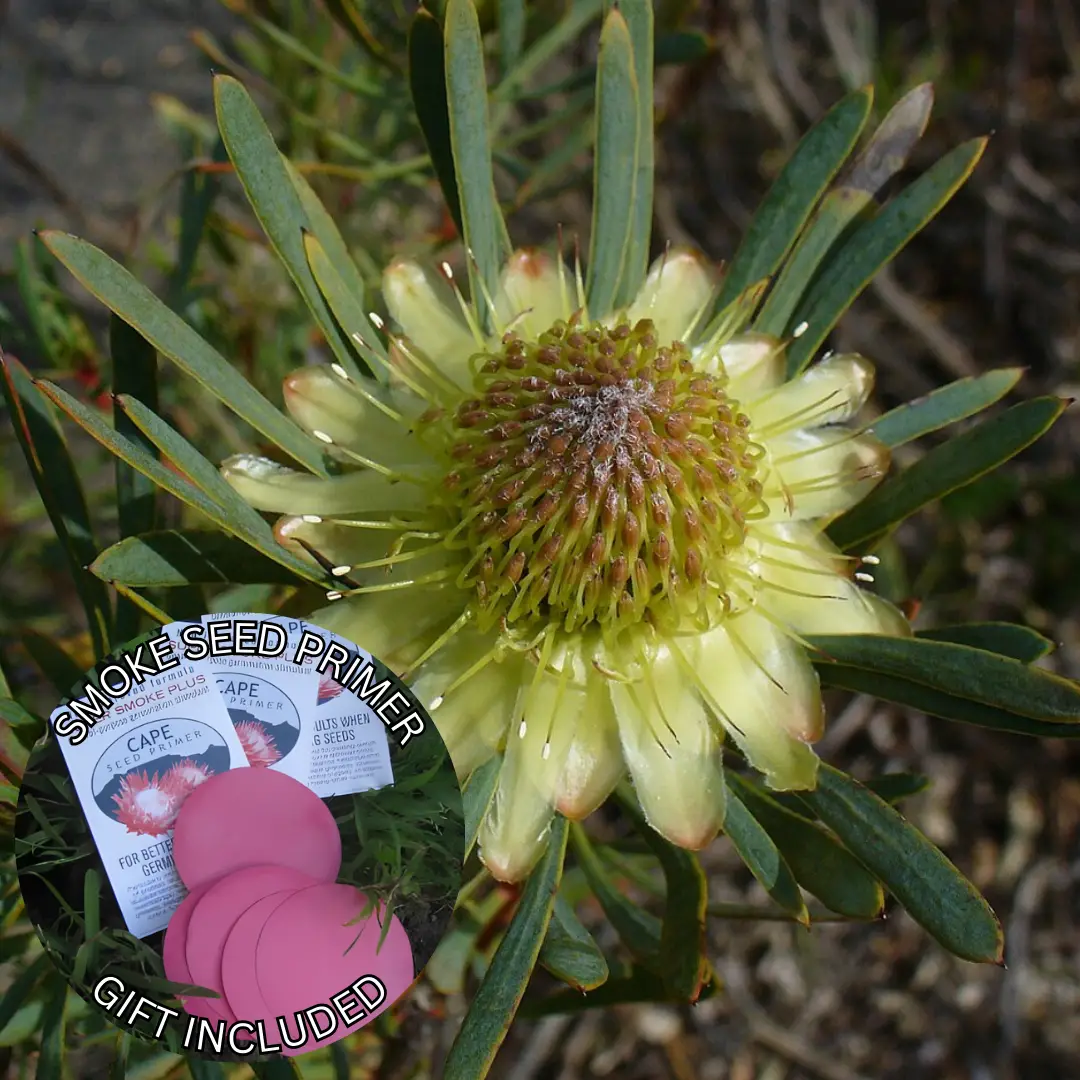
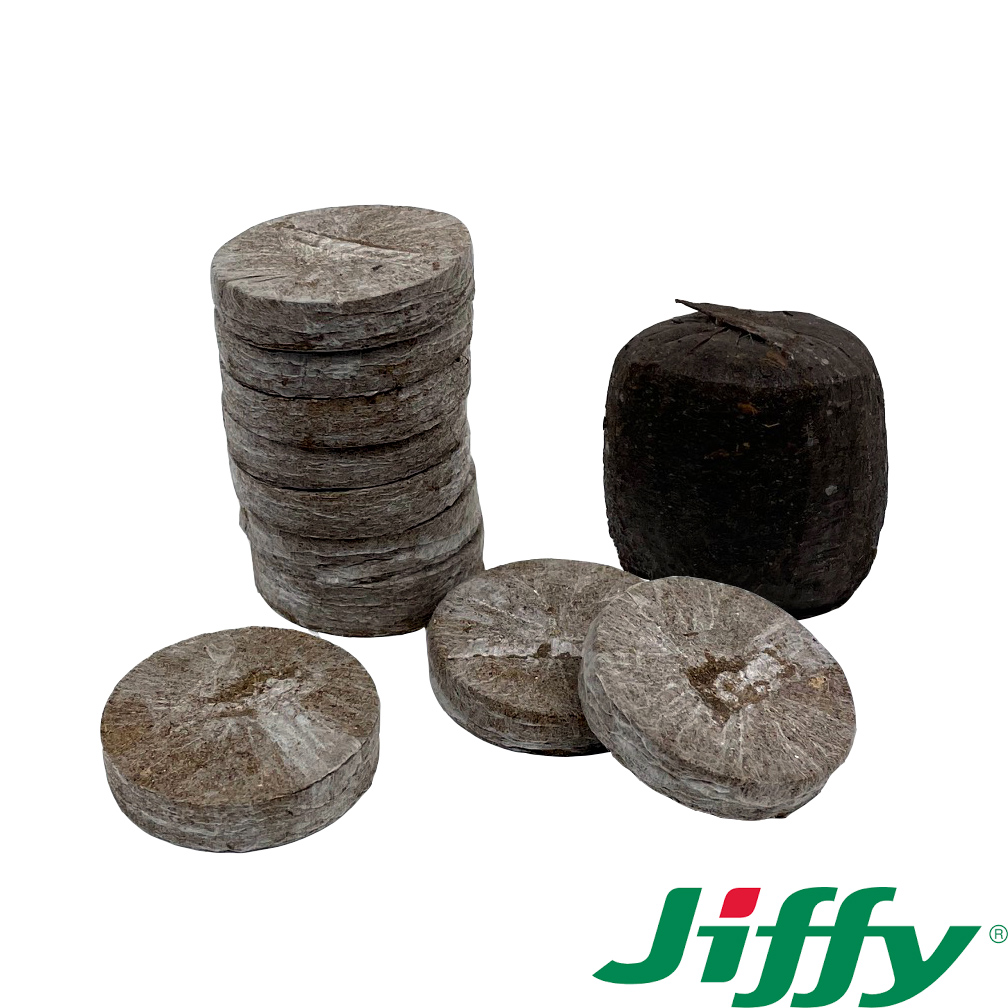
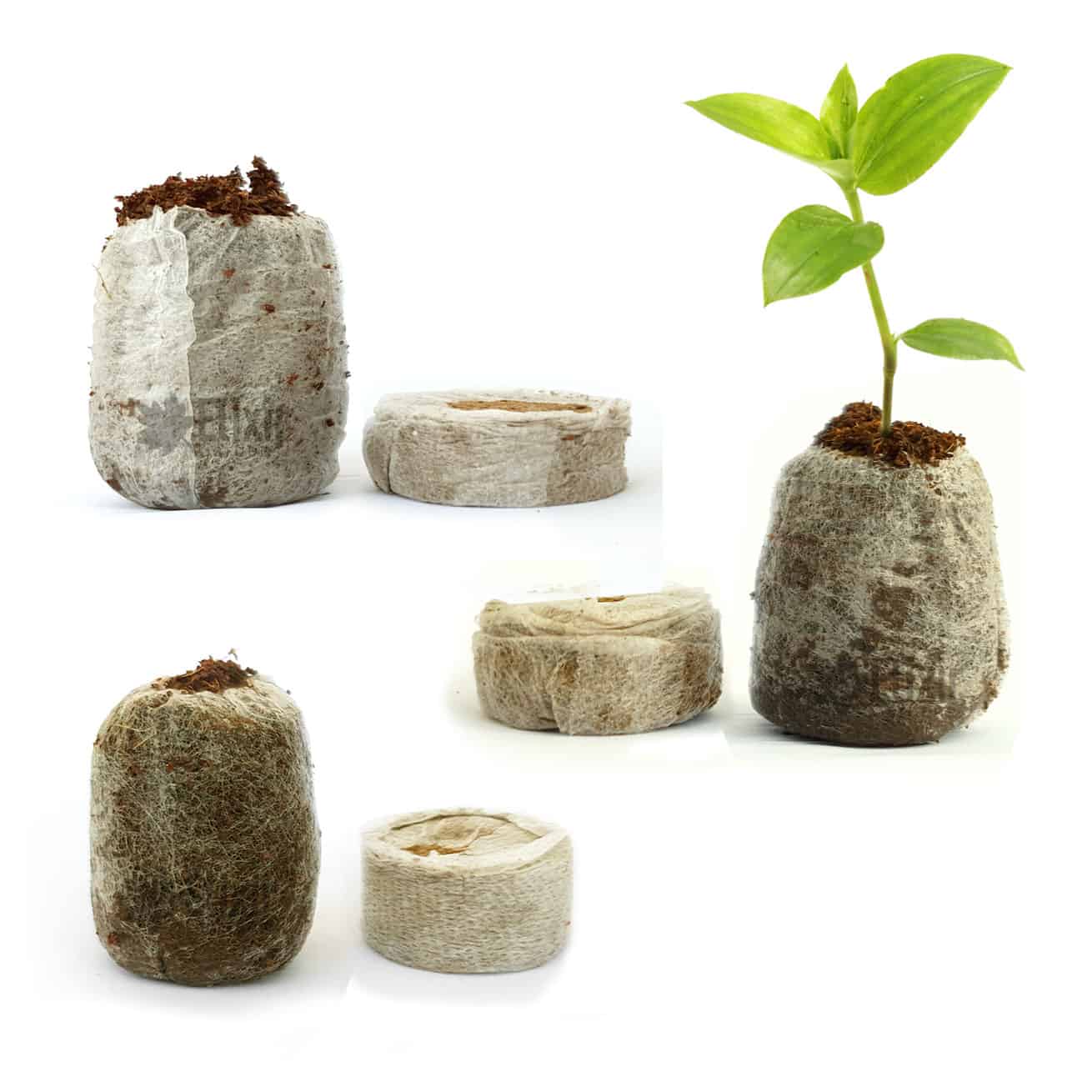
For rare or expensive seed, standardised commercial products (smoke-infused paper discs dissolved in water, or granular 'smoke primers') remove the guesswork of home-made brews. Follow the maker's dilution exactly. Botanic gardens such as Kirstenbosch pioneered these techniques precisely because *Protea* and fynbos seed is too valuable to waste on inconsistent smoke.
Combining triggers, and worked examples
When a species needs both cues, apply heat first, then smoke. A reliable sequence for a mixed fynbos or Mediterranean sowing looks like this:
- Give a hot-water soak or brief oven pulse to break any physical dormancy.
- Transfer immediately into diluted smoke water for 24 hours.
- Sow at a depth of about 2–3 times the seed's diameter (fine seed is barely covered) into a free-draining, low-nutrient mix — sand and a little sieved compost mirrors post-fire soil.
- Keep at the temperature the species expects: many fynbos seeds germinate best with cool nights (8–12 °C) and mild days (16–20 °C), echoing the autumn burning-and-rain season of the Cape.
- Maintain even moisture under good light, and be patient — germination can be staggered over weeks.
Fire is not the enemy of these seeds; it is their alarm clock. Our job is simply to ring the bell at the right pitch.— A common saying among fynbos propagators
A few honest cautions
Smoke and heat are powerful tools but not magic ones. Even correctly treated seed of these species can be slow, erratic, or partly viable, especially if it has been stored too long or too warm. Treat every batch as an experiment: label it, record the exact temperature, time and dilution you used, and note what happened. Over a few seasons you will build a personal reference far more valuable than any general chart — because you'll know how your seed, in your climate, responds.
Master these two triggers and a whole world of extraordinary plants opens up: silver trees, king proteas, feathery restios and the fragrant cistus of our own hills. They asked for fire, and now you can offer them a small, safe echo of it — and watch dormancy give way to green.