

What Physiological Dormancy Really Means
Of all the dormancy types you will meet as a grower of rare plants, physiological dormancy (often abbreviated PD) is the most common — and the most misunderstood. It is not a physical barrier like a stony seed coat, nor a chemical inhibitor sitting on the surface. Instead, it lives inside the embryo itself. The seed is fully formed, the coat is permeable to water, yet the embryo simply refuses to grow because its internal chemistry is holding it back. Think of it as a seed that has 'decided' the season is not yet right.
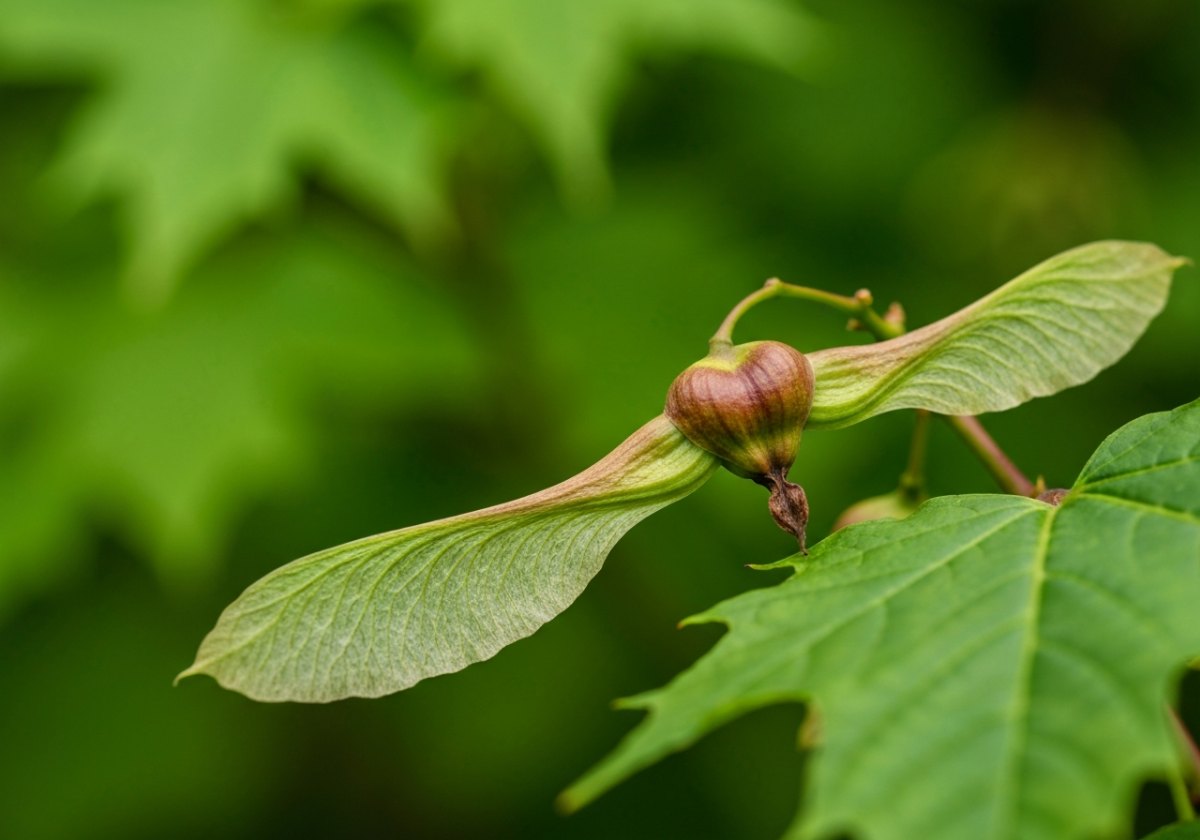
This mechanism is a survival strategy. In the wild, a maple seed that fell in October and germinated immediately would send a tender radicle into the teeth of winter. Physiological dormancy delays germination until the seed has 'counted' enough weeks of cold and damp — a reliable signal that spring, not a warm autumn spell, has genuinely arrived. Our job as germinators is to convincingly imitate that passage of time and temperature.
The Three Levels: Non-deep, Intermediate and Deep
Botanists divide physiological dormancy into three intensities, and knowing which one you are dealing with changes the whole approach.
- Non-deep PD — the mildest form. Broken by a few days to a few weeks of moist chilling, by simple after-ripening in dry storage, or sometimes by gibberellic acid. Many lettuce, Nicotiana and Impatiens types sit here. Days to weeks, not months.
- Intermediate PD — needs a meaningful cold, moist period, typically 4–8 weeks at 1–5 °C. Many temperate trees and perennials such as some Prunus and Rosa fall here.
- Deep PD — the stubborn one. Requires long cold stratification (often 12–16 weeks or more), and gibberellic acid usually will NOT substitute for it. Species like Trillium, some Paeonia and many Ranunculaceae demand real patience, sometimes across two winters.
Cold Moist Stratification: The Core Technique
Cold moist stratification is the workhorse treatment for physiological dormancy. You are giving seeds a controlled, artificial winter. The essential ingredients are moisture, oxygen, low but non-freezing temperature, and time. Here is a reliable method using the refrigerator.
- Pre-soak most seeds in room-temperature water for 12–24 hours to fully hydrate the embryo. Discard any that float if the species is known to sink when viable.
- Prepare a moist medium: vermiculite, fine sand, or milled sphagnum moss. Moisten it until it clumps but releases no water when squeezed hard — roughly field capacity.
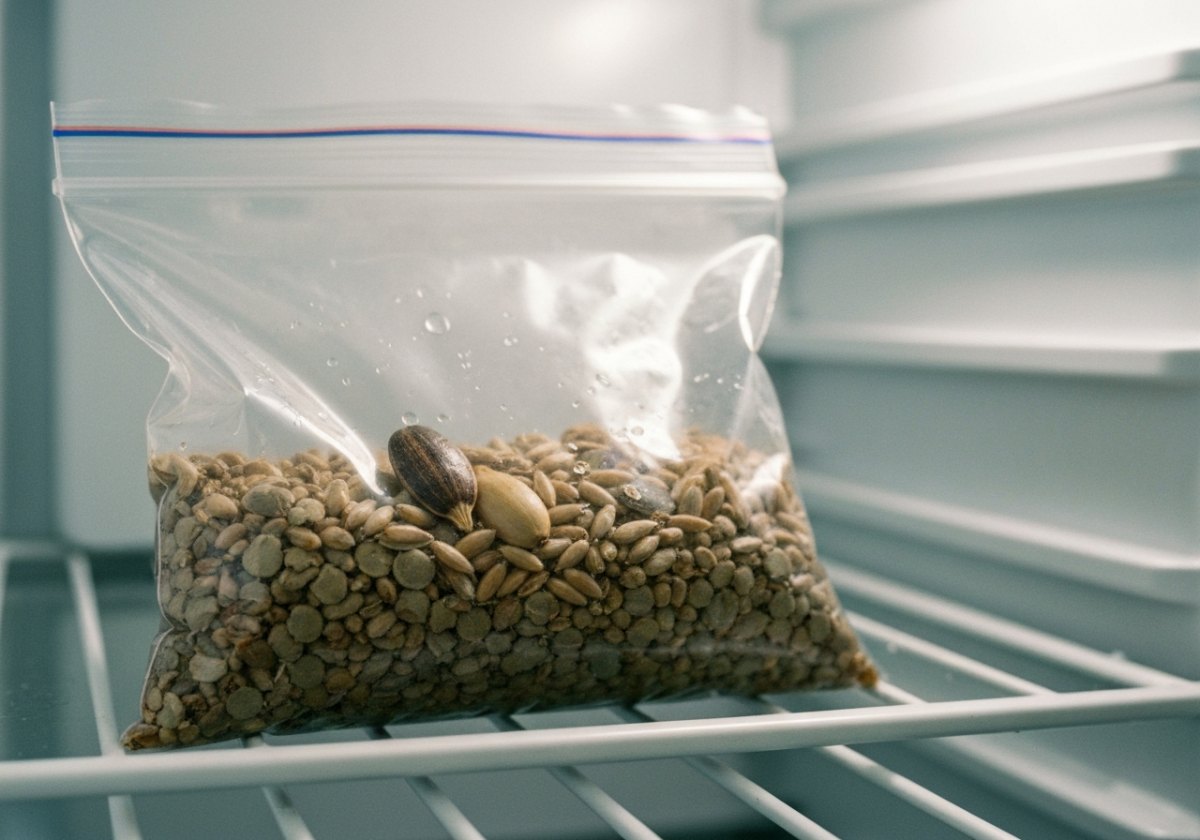
- Mix seeds into the medium in a labelled zip-lock bag, or lay them between two moist coffee filters inside the bag. Aim for about three parts medium to one part seed.
- Seal the bag leaving a pocket of air inside — the embryo still needs oxygen to respire. Do not squeeze all air out.
- Place in the main body of the fridge at 1–5 °C (not the freezer). Write the start date and the target end date on the label.
- Check every 7–10 days for mould, drying out, and — crucially — for early germination. Some seeds germinate in the cold before the period is 'up'.
Typical durations by example: Acer palmatum roughly 8–12 weeks at 3–4 °C; Rosa canina often 8–16 weeks (frequently after a warm phase first); Paeonia species may need a warm period to grow the root, then a cold period to release the shoot; Trillium can require two full cold cycles with a warm summer between them. Always treat published figures as a starting range, and let the seeds themselves tell you when they are ready by producing a radicle.
Warm-then-Cold and Cyclic Dormancy
Some of the most rewarding rare seeds have compound requirements. A large group needs warm moist stratification first, then cold. During the warm phase (often 3–4 weeks at 20–25 °C), the embryo matures or the root emerges; the following cold phase then releases the shoot. Many woodland species, viburnums, and certain lilies work this way. If you skip the warm phase and go straight to the fridge, nothing happens — the seed was not ready to 'hear' the cold signal yet.
Others exhibit cyclic or conditional dormancy: they can enter and exit dormancy depending on the temperatures they experience, which is why outdoor sowing in pots often outperforms the fridge for tricky species. Nature cycles temperature far more subtly than any appliance.

Gibberellic Acid: A Useful Shortcut, Not a Universal Key
Gibberellic acid (GA3) is a plant hormone that can substitute for the chilling signal in non-deep physiological dormancy. A common protocol is soaking seeds in a solution of 250–1000 ppm for 12–24 hours before sowing. It can wake up many perennials and some alpines that would otherwise need weeks of cold. However, GA3 is largely ineffective for deep PD, and overly strong solutions can produce weak, spindly, etiolated seedlings that struggle later. Treat it as one tool in the kit, not a magic bypass.
Reading the Seeds and Troubleshooting
Physiological dormancy rewards observation over rigid calendars. Watch for the moment a white radicle first pokes out — that is your cue to move a seed from the cold bag into a warm, bright sowing tray, planting it at a depth of roughly 1–2 times the seed's diameter. If nothing has happened after the expected period, do not despair or discard: many deep-PD seeds simply need another cycle. Extend the cold, or move to a warm period and then chill again.
- Mould on the medium — usually excess moisture or too little air. Rinse seeds, use fresh barely-damp medium, and consider a very dilute hydrogen peroxide rinse.
- No germination after full period — try a warm–cold–warm cycle, or extend chilling by 4 weeks.
- Germination in the fridge — normal for many species; pot them up immediately and grow cool at first.
- Rotting soft seeds — the embryo may have been dead before you started; test viability with a cut test or float test where appropriate.
The seed that seems dead in your fridge in January is often just a plant keeping its own patient calendar.— Traditional gardening wisdom
Physiological dormancy asks for the one thing gardeners find hardest: patience measured in months rather than days. But once you understand that the barrier is internal chemistry responding to time and temperature, you gain a quiet confidence. You stop fighting the seed and start conversing with it — offering a convincing winter, a believable spring, and the oxygen and moisture it needs to make its own decision. Master this, and a huge proportion of the world's temperate rare plants opens up to you.