The mistake hiding in plain sight
If we had to name the single most common reason rare seeds fail to emerge, it would not be old seed, poor soil, or the wrong temperature. It would be sowing depth. Countless beautiful, viable seeds are buried too deep and quietly exhaust themselves in the dark, or scattered on the surface and left to dry out and die. Sowing depth is invisible once the compost is smoothed over, so mistakes go unnoticed until nothing appears three weeks later.
The good news is that depth is one of the easiest variables to get right, because it follows a simple, memorable rule that applies across a huge range of species. Once you internalise it, you will stop guessing and start sowing with confidence.
The rule: depth equals two to three times the seed's diameter
Here is the rule almost every experienced grower relies on: sow a seed at a depth of about two to three times its own diameter (its widest dimension). A seed 2 mm across wants roughly 4–6 mm of covering. A large 10 mm bean wants 20–30 mm, or 2–3 cm. This scales naturally: big seeds carry big energy reserves and can push up from depth; tiny seeds carry almost nothing and must sit near the light and air.
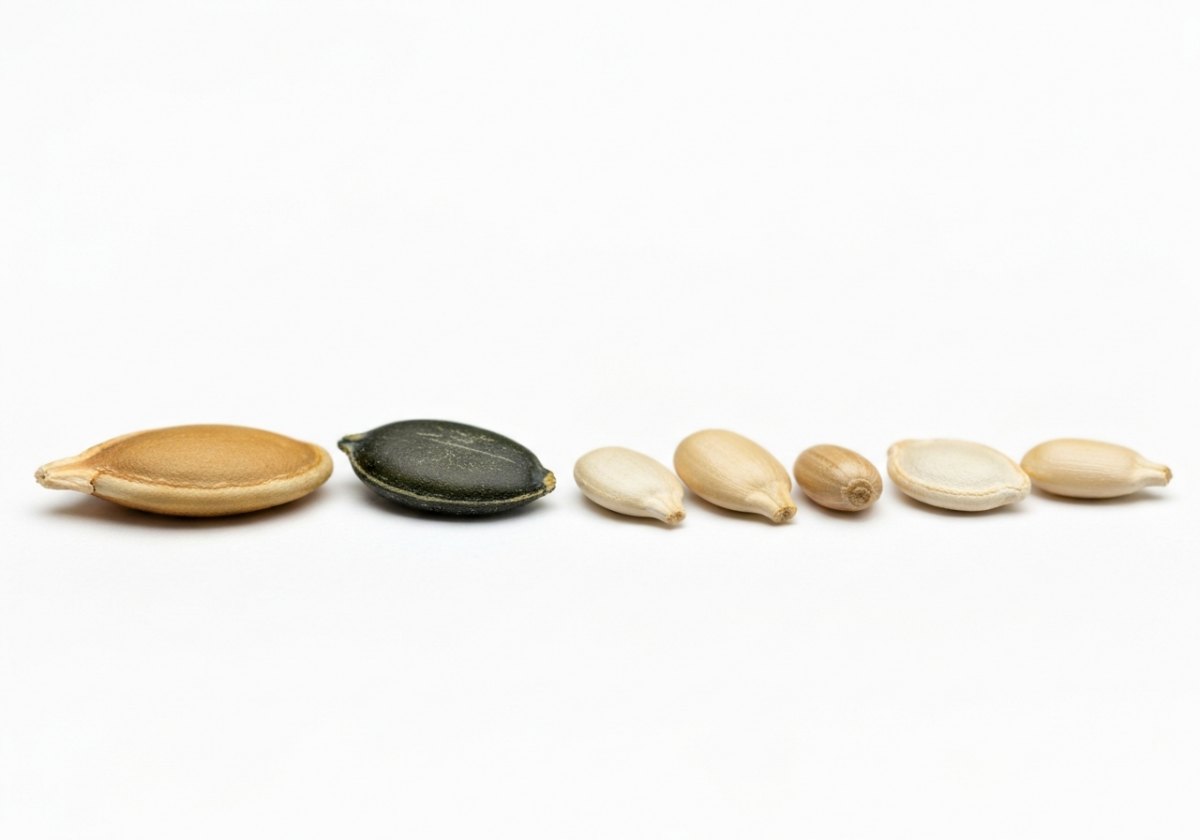
Why does this proportion work so well? A germinating seed must break the surface before its food reserves run out. The endosperm or cotyledons act like a fuel tank. A large seed has a large tank and can afford a longer journey upward; a dust-fine seed has a nearly empty tank and will run dry before it ever reaches light if buried more than a millimetre or two.
Worked examples with real species
Numbers make the rule concrete. Here are depths we use routinely at the nursery:
- Begonia, Lobelia, Petunia (dust-fine, under 0.5 mm): surface sow, do not cover at all. Press gently onto moist compost.
- Foxglove (Digitalis), Poppy (Papaver), Snapdragon (Antirrhinum) (about 0.5–1 mm): surface or the barest dusting of fine vermiculite.
- Tomato, Pepper, Basil (about 2 mm): cover with roughly 4–6 mm.
- Sunflower, Nasturtium, Sweet pea (about 5–7 mm): cover with 1–2 cm.
- Broad bean, Runner bean, Lupin (about 8–12 mm): sow 2–3 cm deep.
- Oak acorn, Aesculus (horse chestnut) (20–30 mm): sow 4–6 cm deep, or lay the acorn on its side just under the surface.
The big exception: light-dependent germinators
Some seeds need light to trigger germination and must never be covered, regardless of the two-to-three-times rule. This is controlled by a pigment called phytochrome, which senses red light. For these species, burying them switches germination off. Classic light-requiring seeds include Begonia, Lobelia, Nicotiana (tobacco), Petunia, many Campanula, Digitalis, and numerous Lactuca (lettuce).
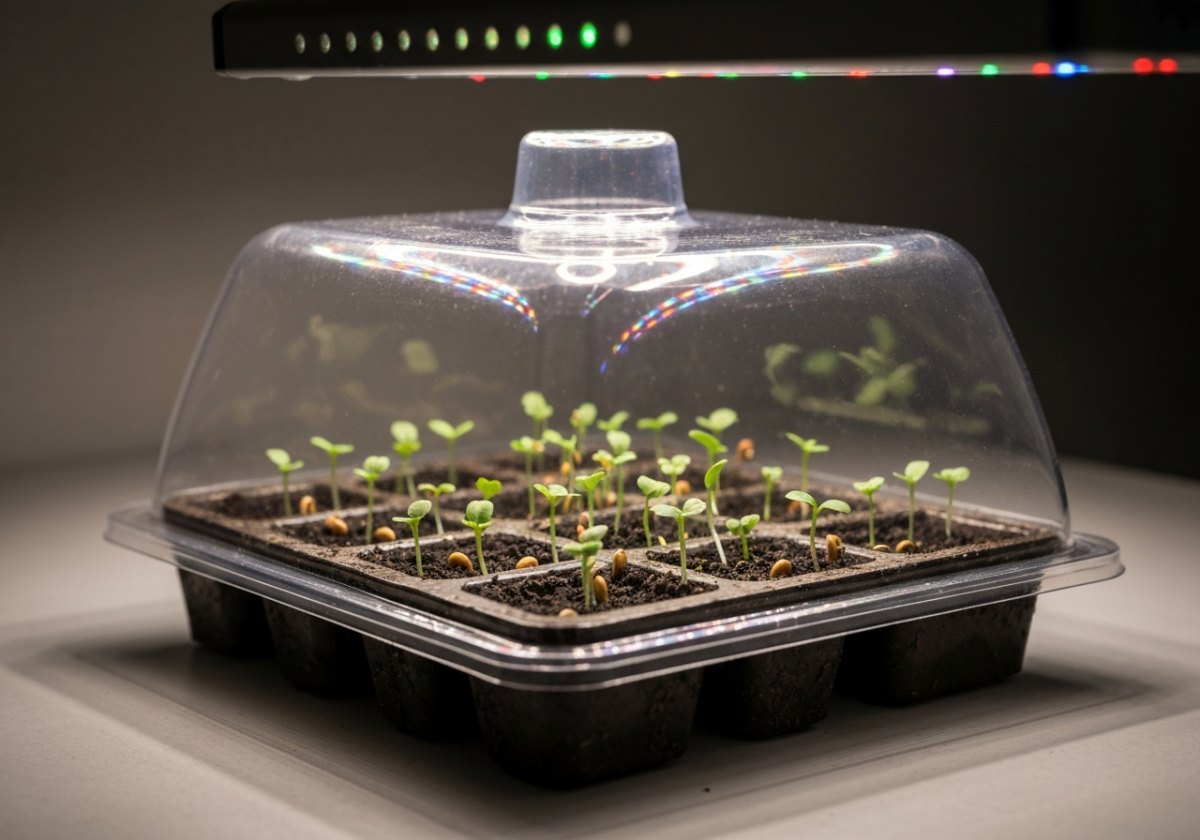
For these, the technique is to firm the compost, water it first so you do not wash the seed away, then scatter the seed on the surface and press it into contact with the moist medium without covering it. A clear humidity dome keeps the surface from drying while still letting light through.
The opposite exception: seeds that demand darkness
A smaller group actively prefers or requires darkness and should be covered a little more generously, or the tray covered with an opaque lid until emergence. Examples include Delphinium, Phlox, Verbena, Viola (some), Nemesia, and Calendula. For these, covering to the full recommended depth and even placing the tray in the dark until sprouts appear improves results.
How to sow at a consistent depth: a practical method
Consistency matters as much as the number. Uneven depth gives you staggered, patchy emergence. Here is a reliable routine for pots and trays.
- Fill the container with fresh, moist seed compost and firm it lightly so the surface is level and about 1 cm below the rim.
- Water thoroughly before sowing so you do not have to disturb the seeds later. Let it drain.
- For covered seed, make a shallow drill or dib holes to the target depth using a pencil, dibber, or the edge of a label. Measure the first few until your eye is calibrated.
- Place seeds with spacing appropriate to the plant, then cover with sieved compost or fine vermiculite to the correct depth.
- Firm the surface gently again to ensure good seed-to-soil contact, then mist lightly if needed.
- Label immediately with species, date, and sowing depth. Future-you will be grateful.
Seed-to-soil contact and covering material
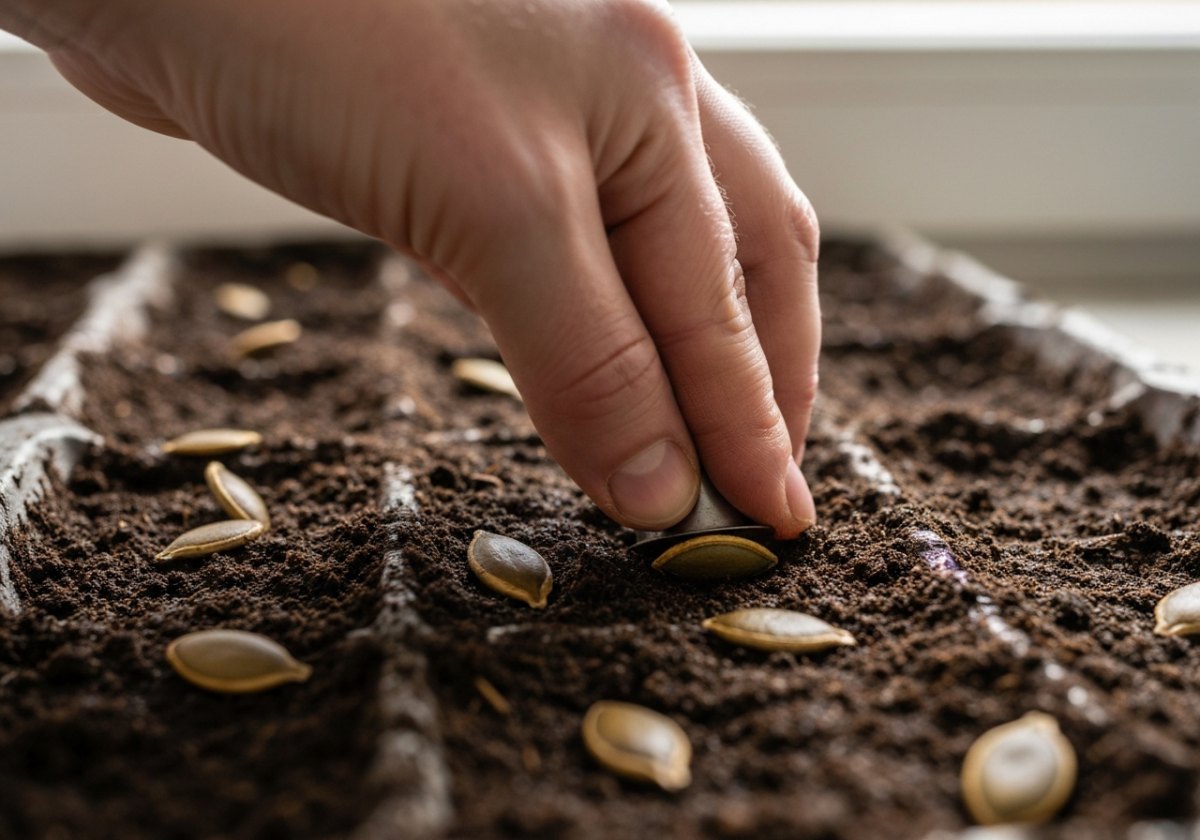
Depth is only half the story. A seed sitting in an air pocket, even at the perfect depth, cannot draw water and will not germinate reliably. Always firm gently after covering so the seed is nestled against moist medium on all sides. For fine surface-sown seed, vermiculite is superb as a covering: it lets light through, holds moisture, and does not crust over. For larger seed, sieved compost or fine grit works well.
Bringing it together
Master three ideas and depth stops being a mystery. First, the default: two to three times the seed's diameter. Second, the light exception: dust-fine and known light-lovers stay on the surface. Third, the darkness preference: a handful of species want to be fully covered and kept dark until they show. Combine correct depth with good moisture and firm seed-to-soil contact, and you remove one of the biggest, quietest causes of disappointment. No method can promise emergence from every seed, but sowing at the right depth gives each one its fair chance to reach the light.