When the Soil Betrays the Seed
You can source a perfect seed, time your sowing beautifully, and provide ideal warmth — and still watch nothing emerge, or worse, watch a promising seedling collapse overnight. In the vast majority of these heartbreaks, the culprit is not the seed. It is the substrate. The medium you sow into is not passive dirt; it is a living, breathing, chemically active environment that can nurture or quietly sabotage germination. In this chapter we will diagnose the most common substrate problems, learn to recognise their symptoms, and fix them with concrete, repeatable methods.
Think of the substrate as a life-support system with four jobs: hold water, hold air, anchor the roots, and stay chemically neutral enough not to poison the tender tissue of a germinating embryo. When any one of these fails, you get a recognisable pattern of trouble. Let us walk through them.
Problem 1: Damping-Off (The Silent Seedling Killer)
Damping-off is the single most common cause of seedling death in home germination. It is caused by a group of soil-borne fungi and water-moulds — chiefly *Pythium*, *Phytophthora*, *Rhizoctonia* and *Fusarium* — that thrive in cold, wet, poorly ventilated conditions. The seedling germinates normally, then the stem at the soil line turns dark, thin and water-soaked, and the plant topples as if pinched. Pre-emergence damping-off is even sneakier: the seed rots before it ever breaks the surface, and you blame the seed.
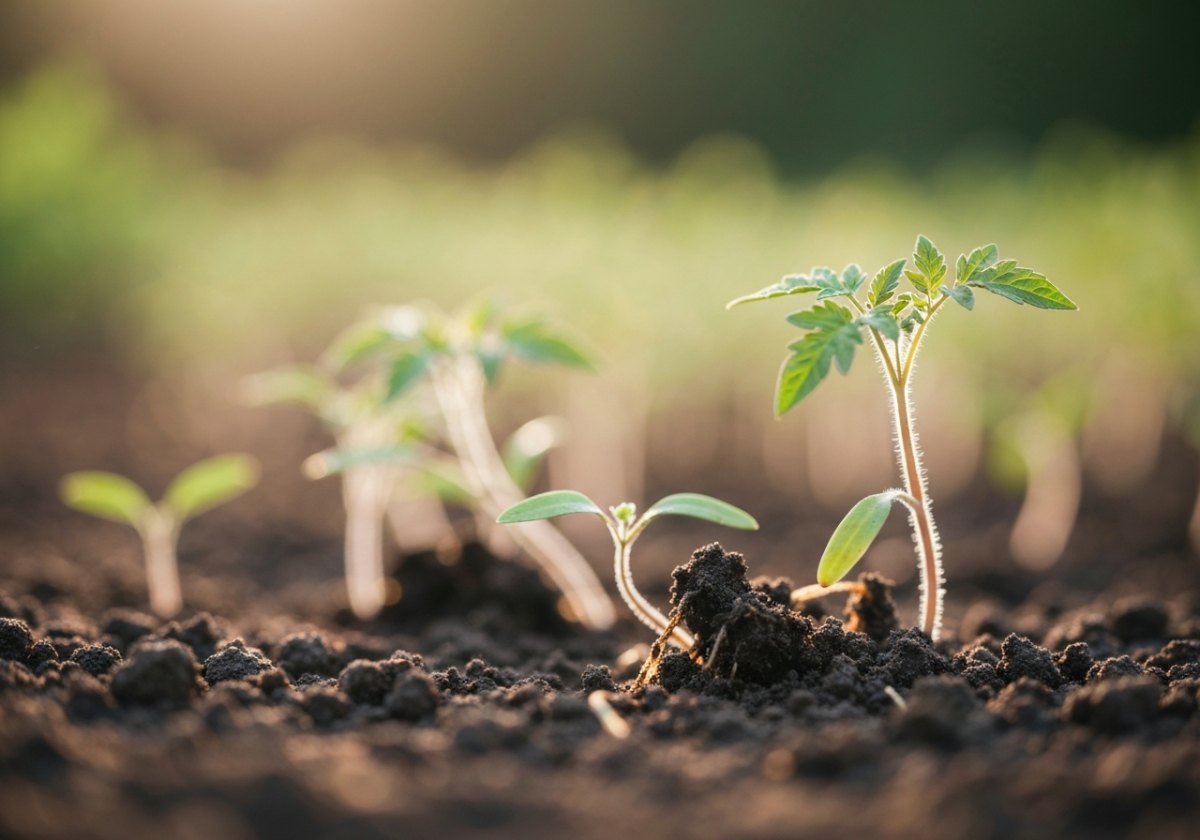
The conditions that invite it are predictable: substrate temperatures below 18 °C combined with saturation, stagnant air under a dome that never opens, sowing too densely, and reusing unsterilised soil. Prevention is far more reliable than cure — once *Pythium* is established in a tray, that tray is usually lost.
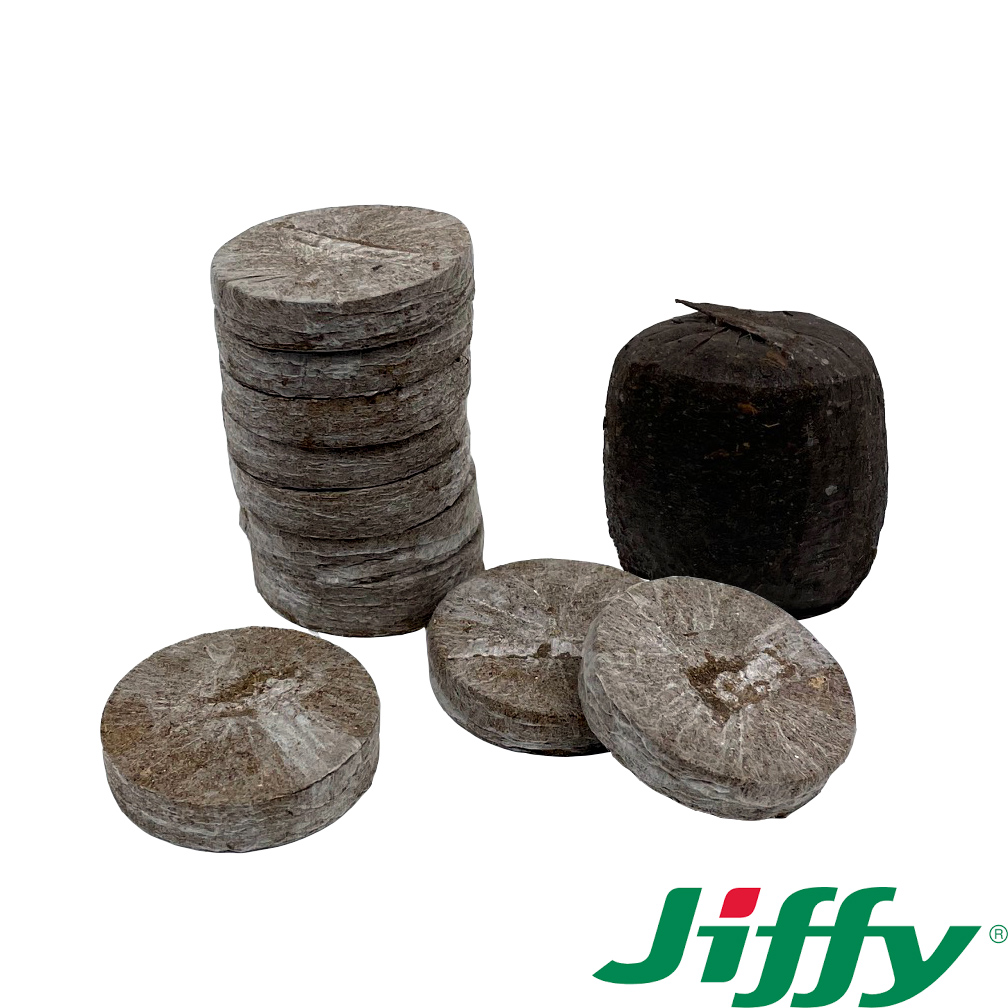
- Use a fresh, sterile seed-starting mix rather than garden soil or reused compost. If reusing, heat moist medium to 82–90 °C for 30 minutes (oven or steam) and cool fully before sowing.
- Sow at the correct temperature. Most rare seeds germinate cleanly at 20–25 °C substrate temperature; a heat mat that keeps you above 20 °C dramatically reduces fungal risk.
- Water from below and let the surface dry slightly between waterings — a permanently glistening surface is a Pythium spa.
- Ventilate. Crack the humidity dome for 15–30 minutes twice a day, or leave a 1–2 cm gap once seedlings emerge.
- Space seeds so air moves between them; overcrowding is a leading cause.
- A dusting of cinnamon or a diluted chamomile drench offers mild antifungal help, though neither is a substitute for good hygiene.
Problem 2: Waterlogging and Compaction
A germinating seed needs oxygen just as much as it needs moisture. Roots and embryos respire, and if every pore in the substrate is filled with water, they effectively drown. Waterlogged medium turns sour, smells faintly of rotten eggs (anaerobic bacteria producing hydrogen sulphide), and often shows a greenish or grey sheen on the surface.
Compaction is the close cousin of waterlogging. Fine, dense mixes — pure peat, sifted garden loam, or coir that has been packed down hard — hold water beautifully but leave almost no air. A healthy germination substrate should be roughly 50% solids, 25% water, 25% air by volume when moist. You achieve that balance by adding coarse structure.
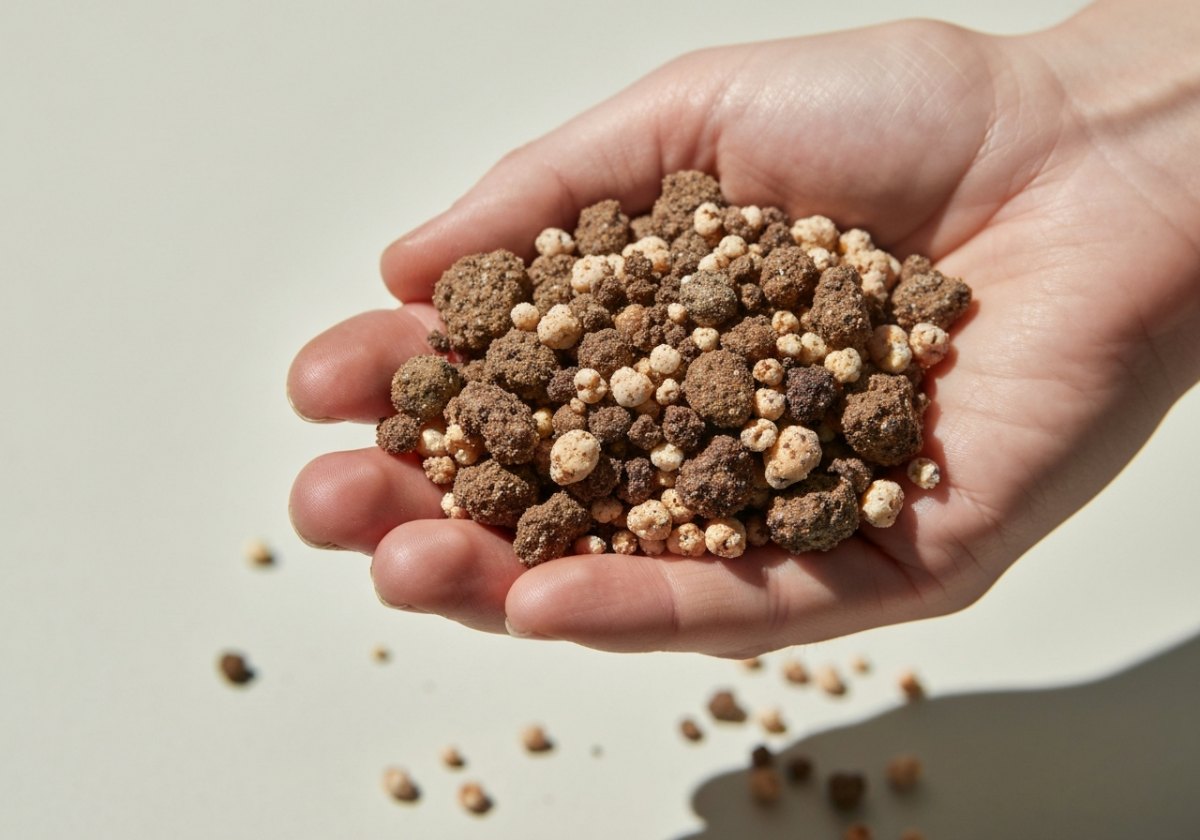
- Add 20–40% perlite, coarse pumice, or 3–6 mm horticultural grit to any peat- or coir-based mix to open up air channels.
- Never pack the substrate down. Fill the container, tap it once on the bench to settle, and leave it loose.
- Ensure every container has generous drainage holes — a seed tray sitting in a sealed dish of standing water is a slow drowning.
- Test the moisture by squeezing a handful: it should feel like a wrung-out sponge, releasing at most one or two drops, not a stream.
Problem 3: The pH and Salinity Trap
Most seeds germinate best in a slightly acidic to neutral substrate, roughly pH 5.5 to 6.5. Fresh sphagnum peat can sit as low as pH 3.5–4.5, which stalls many seeds, while some coir and mineral soils drift above 7.5. Extreme pH also locks up nutrients, though for germination itself the seed carries its own food reserves, so the pH problem is mainly about creating a hostile chemical environment for the emerging root.
Salinity is the more common hidden killer. Fresh coir is frequently loaded with sodium and potassium salts from its ocean-side processing, and cheap composts can carry high soluble-salt levels. High salt draws water out of the seed by osmosis — the exact opposite of what imbibition needs — so seeds sit swollen but never sprout, or roots emerge scorched and brown at the tip.
- Buffer or rinse coir before use: soak it, then drain and flush with clean water two or three times until the runoff is clear and tastes only faintly of anything.
- Check pH cheaply with a soil probe or aquarium test kit; aim for 5.5–6.5 for most species.
- To raise a too-acidic peat mix, add a small amount of dolomitic lime (about 4–6 g per litre) and let it react for a few days before sowing.
- Avoid adding fertiliser to germination mix. A newly germinated seedling has all the food it needs in the cotyledons for its first week or two, and fertiliser salts only raise the risk of osmotic burn.
Problem 4: Contamination, Pests and Green Slime
A green or rust-coloured crust on the surface is usually algae or liverwort, thriving on constant surface moisture and light. It is not directly fatal, but it competes for oxygen, forms a hard skin that seedlings struggle to pierce, and signals that the surface is far too wet. Fungus gnats — tiny black flies whose larvae chew tender roots — are another sign of a chronically damp, organic-rich surface.
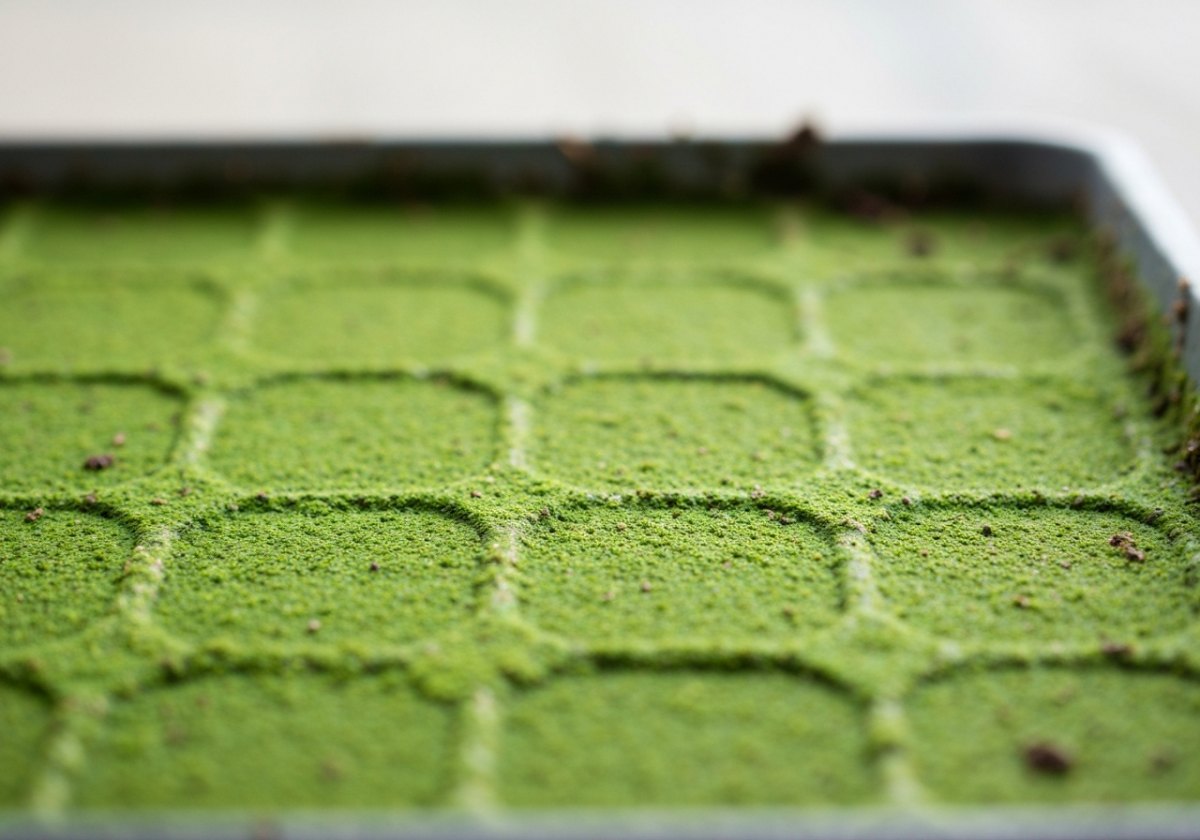
- Top-dress with a 3–5 mm layer of dry, inert grit or fine vermiculite to keep the surface dry and deny algae a foothold.
- Let the surface dry between waterings and switch to bottom-watering.
- For fungus gnats, allow the top 1–2 cm to dry fully, use yellow sticky traps, and consider a *Bacillus thuringiensis israelensis* drench to kill larvae.
- Sterilise reused pots and trays with a 10% bleach solution or hot water before each sowing season.
A Quick Diagnostic Table for Your Bench
- Seedlings topple at the soil line, dark thin stems → damping-off (too wet, too cold, too crowded).
- Seeds swell but never sprout → high salinity or waterlogging cutting off oxygen.
- Roots emerge brown-tipped and scorched → salt burn or fertiliser in the mix.
- Sour, eggy smell and grey surface → anaerobic, waterlogged, compacted medium.
- Green or rust crust on top → algae from a permanently wet surface.
- Uneven, patchy germination → pH extremes, dry pockets, or inconsistent moisture.
Feed the substrate, not the seed. Get the medium right and germination becomes almost quiet — the seed simply does what it was built to do.— A working principle at Quinta dos Ouriques
None of these problems is a life sentence for your growing. Almost every substrate failure traces back to the same trio: too much water, too little air, or a chemically hostile mix. Master those three variables — sterile structure, balanced moisture, neutral chemistry — and you eliminate the great majority of germination disappointments before they ever begin. In the next chapter we will build the ideal mixes species by species, so you can match the medium to the seed with confidence.