


The great germination lottery — or is it?
Sow a packet of radish seeds and you will often see green shoots in three or four days, with almost every seed sprouting. Sow a handful of tree peony, tropical palm, or native lily seeds the same way and you may wait eight months and get nothing — not because you did anything wrong, but because those seeds were never designed to sprout on demand. Understanding *why* is the single most useful thing a grower of rare seeds can learn. Once you can read a seed's biology, you stop fighting it and start cooperating with it.
In this chapter we will unpack the real reasons some seeds are quick and forgiving while others are slow, stubborn, or downright cryptic. The good news: 'difficult' almost always means 'needs a specific signal', not 'impossible'. When you supply the right signal, difficult seeds can become remarkably reliable.
Two different jobs: speed vs. survival
Every wild seed is a tiny gamble made by the parent plant. In evolutionary terms, a seed has to solve two problems at once: germinate fast enough to grab resources, but not so fast that it sprouts during a killing frost or a dry spell that will destroy the seedling. Plants from stable, resource-rich environments (many crops and weeds) evolved to germinate immediately — speed wins. Plants from seasonal or harsh climates evolved built-in delays that hold the seed until conditions are genuinely favourable — timing wins.
So 'easy' and 'hard' are really shorthand for how much environmental proof a seed demands before it commits. Crops have been bred for thousands of years to drop this caution. Wild and rare species usually keep it.
What makes a seed easy
Easy seeds share a recognizable profile. If you look at your seed and it matches most of the points below, expect quick, high germination with minimal fuss.
- No dormancy: the embryo is mature and ready the moment it hits moisture (lettuce, radish, tomato, most brassicas, beans, squash).
- A thin, water-permeable seed coat that imbibes water within hours.
- A broad temperature tolerance, often germinating well anywhere from 15–25 °C.
- Fresh, high-viability seed — many easy species are also short-lived crops harvested annually.
- Germination in days, not weeks: tomato 6–8 days at 21 °C, radish 3–5 days, basil 5–10 days.
What makes a seed hard: the four dormancy locks
Difficult seeds are usually protected by one or more dormancy mechanisms. Think of them as locks, each needing a different key. Most stubborn species have just one or two locks — identify them and the seed opens up.
1. Physical dormancy (hard, waterproof coats)
Some seeds have a coat so hard and waxy that water simply cannot get in. Until the coat is breached, the embryo stays dry and dormant — sometimes for decades. This is common in the legume family (Acacia, Lupinus, Gleditsia), in Canna, and in many hard-shelled tropical species. The key is scarification: nicking, sanding, or heat-treating the coat.
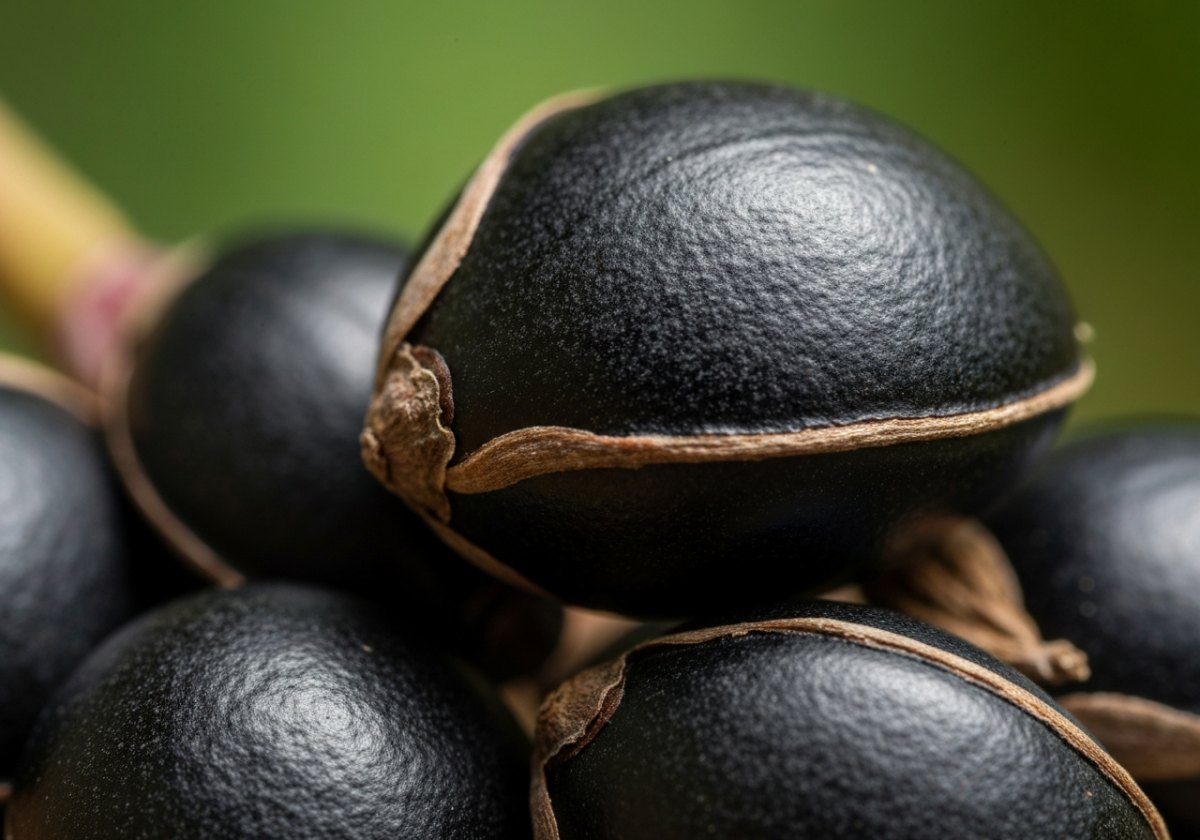
- Rub the seed on fine sandpaper (120–220 grit) until you see the paler layer beneath the outer coat — do not dig into the embryo.
- Alternatively, nick the coat with a sharp knife or nail clipper on the side opposite the hilum (the seed's 'belly button').
- For heat-tolerant legumes, pour water at about 80 °C over the seeds and let them soak as it cools for 12–24 hours; the ones that swell to twice their size are ready to sow.
- Sow immediately once the seed has imbibed and swollen — do not let it dry out again.
2. Physiological dormancy (a chemical 'wait' signal)
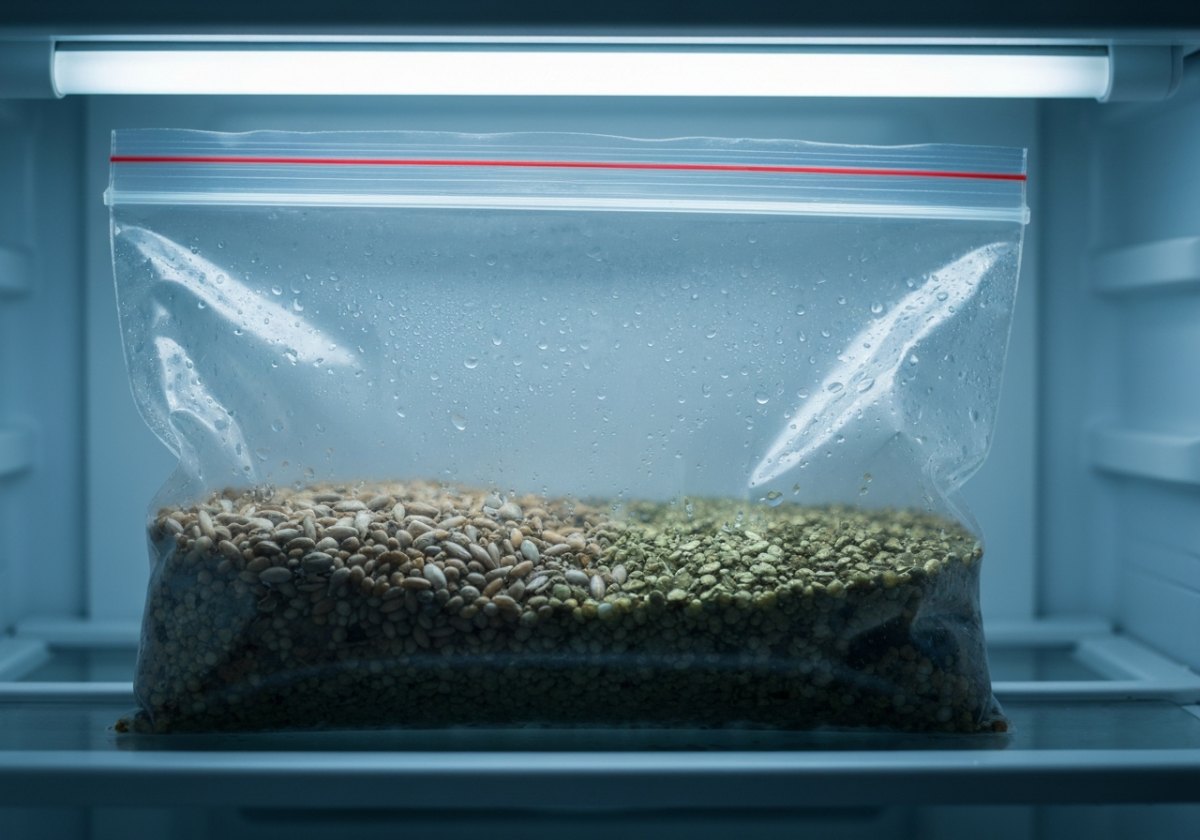
Here the embryo is fully formed but held back by internal hormones — chiefly a balance between growth-inhibiting abscisic acid and growth-promoting gibberellins. The seed is chemically waiting for winter to pass. The key is cold-moist stratification: a period of weeks at low temperature while damp, which mimics winter and shifts the hormone balance.
- Mix seeds with barely-moist vermiculite, sand, or peat (moist enough to clump but not drip) in a labelled zip bag.
- Refrigerate at 1–5 °C. Typical durations: apple and many temperate trees 60–90 days; many Aquilegia and Primula 3–4 weeks; tree peony and some Trillium need a warm period first, then cold.
- Check weekly for mould or early sprouting; sow any that germinate in the bag straight away.
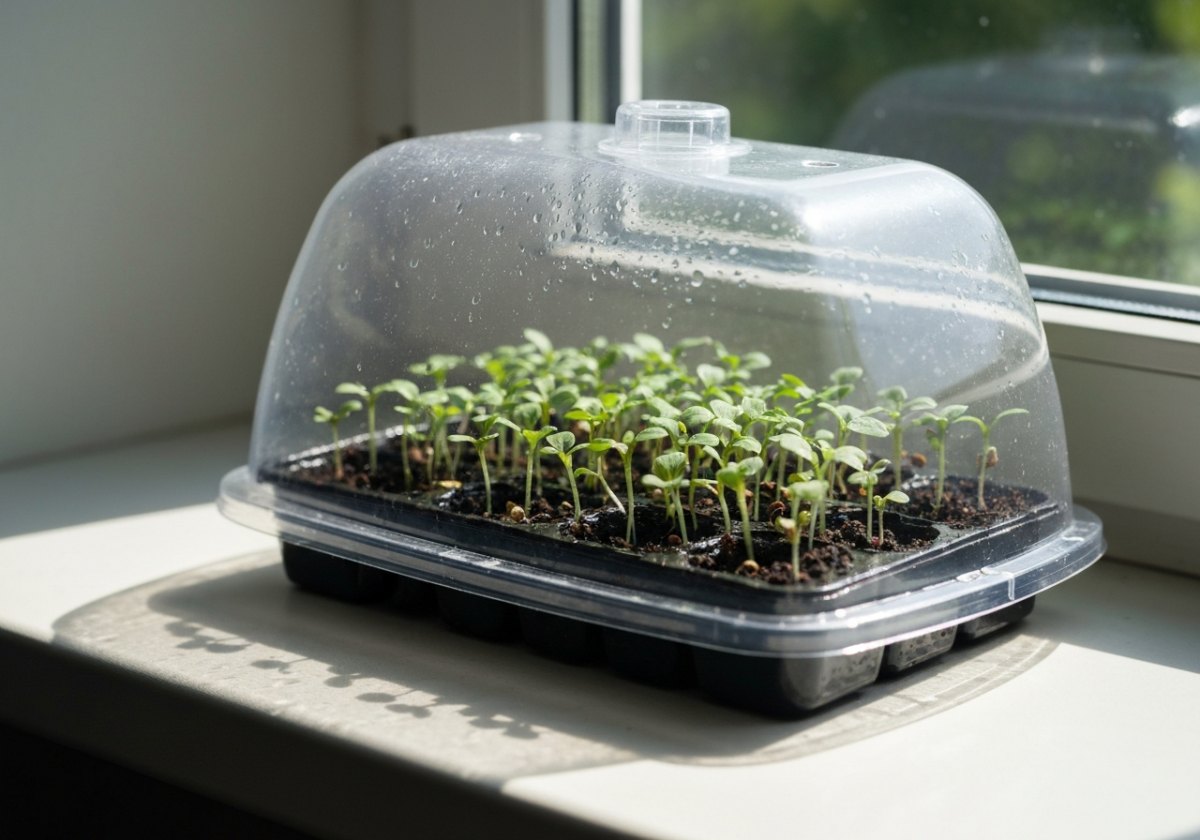
- After the cold period, move to warmth (18–22 °C) and light as appropriate for the species.
3. Morphological dormancy (an unfinished embryo)
In some families — umbellifers, many lilies, palms, magnolias, and ginseng — the embryo is tiny and physically immature when the seed is shed. It must continue growing *inside the seed* before it can germinate. This takes time and warmth, and no amount of impatience speeds it up. Palm seeds, for example, may need 2–6 months of warm, humid conditions (around 27–32 °C) simply for the embryo to mature and emerge.
When morphological and physiological dormancy combine (called morphophysiological dormancy), you may need a warm period *then* a cold period *then* warmth again — this is why species like Trillium and some peonies can take 18 months and two winters to appear.
4. Freshness and storage — the silent killer
Not all difficulty is dormancy. Some seeds are simply recalcitrant: they cannot survive drying and lose viability within weeks or days. Oaks, chestnuts, many tropical fruits, and Magnolia seeds fall here — they must be sown fresh or kept moist and cool, never dried on a shelf. Conversely, some seeds are 'orthodox' and store for years if kept dry and cold. A large share of 'my rare seeds didn't work' cases are really dead seed that dried out or aged in a hot drawer.
- Orthodox seeds (tomato, most annuals, many legumes): store dry, dark, and cool; viability of years to decades.
- Recalcitrant seeds (oak, mango, lychee, Magnolia): sow within days to weeks, never let them dry out.
- Always note the harvest year on your packets — a five-year-old parsnip or Angelica seed may be almost entirely dead even though it looks perfectly fine.
A simple diagnostic routine
Before sowing an unfamiliar rare seed, run through this quick assessment. It turns guesswork into a plan.
- Is the coat hard and shiny, and does a 24-hour soak leave it unswollen? → Suspect physical dormancy; scarify.
- Does the species come from a climate with a real cold winter? → Suspect physiological dormancy; plan cold-moist stratification.
- Is it a palm, lily, umbellifer, or known slow-germinator? → Suspect morphological dormancy; be patient and keep warm.
- Is the seed fleshy, large, and from a tree or tropical fruit? → Suspect recalcitrance; sow immediately, do not dry.
- None of the above, and it's a common crop? → Likely no dormancy; sow at 18–22 °C and expect action within two weeks.
Closing thoughts
There is no such thing as an inherently 'impossible' seed — only a seed whose signals you haven't yet matched. Easy seeds germinate because their ancestors lived where speed paid off; hard seeds resist because their ancestors survived by waiting for exactly the right moment. When you scarify a Canna, chill an Aquilegia, or sow an acorn the day it falls, you are not overpowering the seed — you are speaking its language.
Patience with seeds is not passivity; it is understanding time from the plant's point of view.— Quinta dos Ouriques University
In the next chapters we will take each dormancy lock in turn and practise the exact techniques — scarification, stratification, warm incubation, and fresh sowing — so that the 'difficult' species become simply species you know how to talk to.