Why a seed refuses to grow
Imagine you have just received a small paper envelope of seeds you have waited months to obtain. You sow them in warm, moist compost, keep the tray at a perfect 22 °C, and wait. And wait. Nothing happens. It would be easy to blame yourself, the seed supplier, or the compost. But very often the seed is simply doing exactly what it evolved to do: refusing to germinate until conditions are truly right. This deliberate refusal has a name — dormancy — and understanding it is the single most useful skill you will learn in this entire course.
Dormancy is not death, and it is not weakness. A dormant seed is fully alive, respiring slowly, holding a viable embryo in suspended animation. It is waiting for a specific signal — a cold winter, a scratch on its coat, a chemical washed away by rain — before it commits its one shot at life to germination. Our job as growers is to read what signal the seed is waiting for, and to provide it convincingly.
A precise definition
In botany, dormancy is defined as the failure of a viable, intact seed to germinate under conditions that would otherwise be favourable — warmth, moisture, and oxygen. The key words are *viable* (the embryo is alive) and *favourable conditions*. If a seed fails to germinate because it is dead, or because it is too cold or too dry, that is not dormancy — that is simply an unsuitable environment or a dead seed. True dormancy is an internal or structural block that persists even when everything on the outside is right.
Why dormancy exists at all
Dormancy is an evolutionary insurance policy. A plant that dropped seeds capable of germinating the instant they hit moist ground would risk catastrophe: seedlings sprouting in autumn just before a killing frost, or an entire generation germinating after a single freak summer shower only to die when the drought returns. Dormancy spreads the bet across time and space.
- Seasonal timing — cold-requiring seeds (like many maples, peonies and apples) only germinate after winter has passed, ensuring seedlings emerge into spring, not autumn.
- Bet-hedging over years — hard-coated legumes and many desert annuals germinate in staggered batches over several seasons, so no single bad year wipes out the population.
- Dispersal in time — some seeds must wait for the parent canopy to fall or for a fire to clear competition before they emerge into light.
- Avoiding the parent — dormancy can delay germination until seeds have been carried away by animals, water, or gut passage.
The main types of dormancy
Botanists (following the classic Baskin & Baskin system) recognise five broad categories. In practice most gardeners meet the first three constantly, and the last two occasionally. Learning to recognise which type you are facing tells you exactly which treatment to apply.
1. Physical dormancy — the impermeable coat
Here the seed coat is so hard and waterproof that water simply cannot get in. The embryo is ready to go, but it is locked behind a sealed door. This is extremely common in the pea and bean family (Fabaceae), in mallows (Malvaceae), morning glories (Convolvulaceae) and in Canna. Classic examples include *Lupinus*, *Gleditsia triacantha*, *Canna indica* and hard-coated *Ipomoea*. In nature the coat is worn down by microbial action, freeze-thaw abrasion, fire, or passage through an animal's gut. In cultivation we break it deliberately by scarification — nicking, filing, sanding, or a hot-water soak.
2. Physiological dormancy — the chemical brake
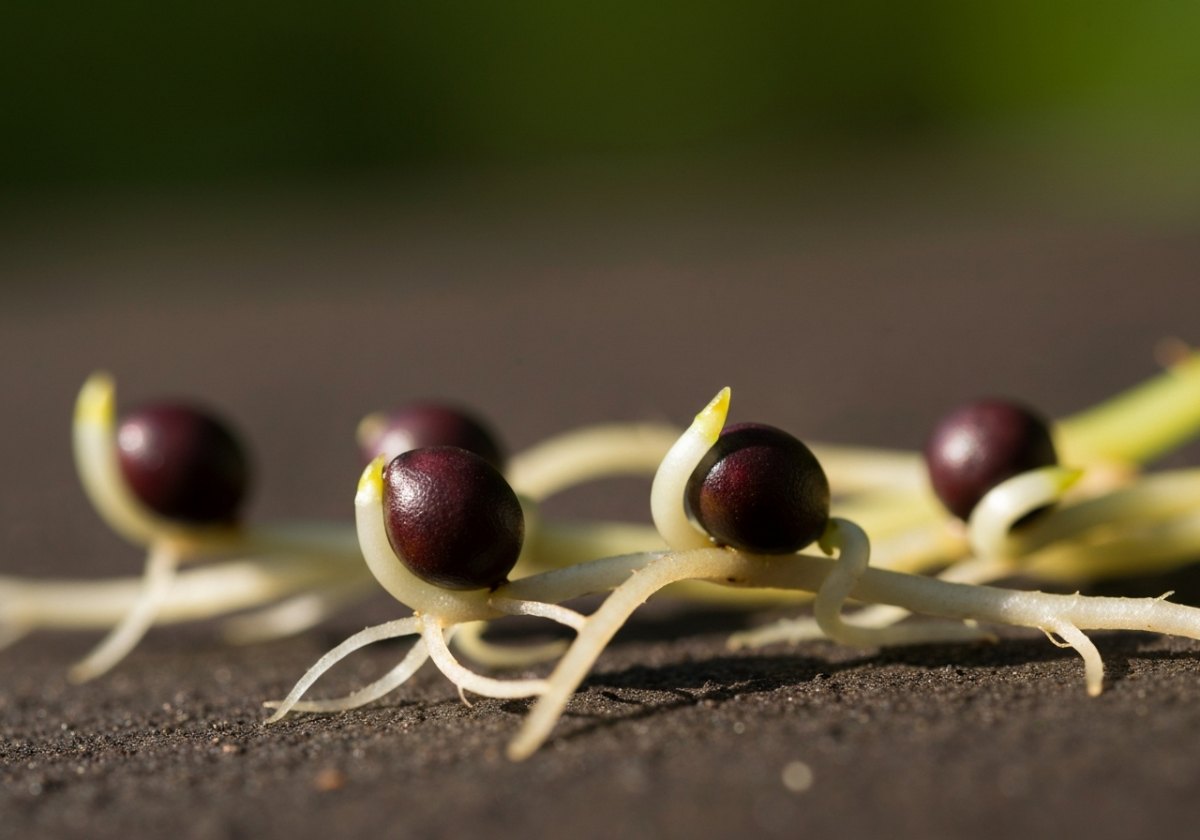
This is the most widespread type worldwide. Water and oxygen can enter freely, but the embryo itself is held back by internal hormones — chiefly a high ratio of the inhibitor abscisic acid (ABA) to the promoter gibberellin (GA). The seed needs an environmental cue, most often a period of moist chilling, to shift that balance. This is why temperate trees and perennials such as *Acer* (many maples), *Malus* (apple), *Fraxinus* (ash) and countless alpines require cold moist stratification: typically 4–13 weeks at 1–5 °C in moist medium. Some species instead need warm stratification, and a few need warm then cold in sequence.
3. Morphological dormancy — the unfinished embryo
In some families the seed is shed before its embryo has finished growing. The embryo is tiny and must enlarge inside the seed before germination is even possible. This is common in the carrot family (Apiaceae), in *Fraxinus*, and in many primulas and lilies. Given warmth and moisture the embryo simply needs *time* — often several weeks — to mature. There is no chemical block, only incomplete development.
4. Morphophysiological dormancy — both at once
The trickiest combination: the embryo is both underdeveloped AND chemically inhibited. These seeds need one condition for the embryo to grow and another to release the physiological brake, often in a strict sequence. Peonies, hellebores, trilliums and many woodland lilies fall here. A *Trillium* or *Paeonia* seed classically needs a warm period (to grow the root) followed by a cold period (to release the shoot), which is why they can take 18 months or two full winters to appear.
5. Combinational dormancy — hard coat plus chemical brake
Here physical dormancy and physiological dormancy occur together: the coat must first be breached AND the embryo must then receive its cold or warm cue. Some *Geranium*, *Rhus* and *Ceanothus* species behave this way. The treatment order matters — usually scarify first so that water and cold can then reach and act on the embryo during stratification.
How to identify which type you have
You will rarely have a laboratory, so use these practical diagnostics, in order:
- Look up the genus. Ninety percent of the work is knowing the family. Fabaceae, Malvaceae, Convolvulaceae and Cannaceae almost always mean physical dormancy. Temperate trees and perennials from cold climates usually mean physiological (cold) dormancy.
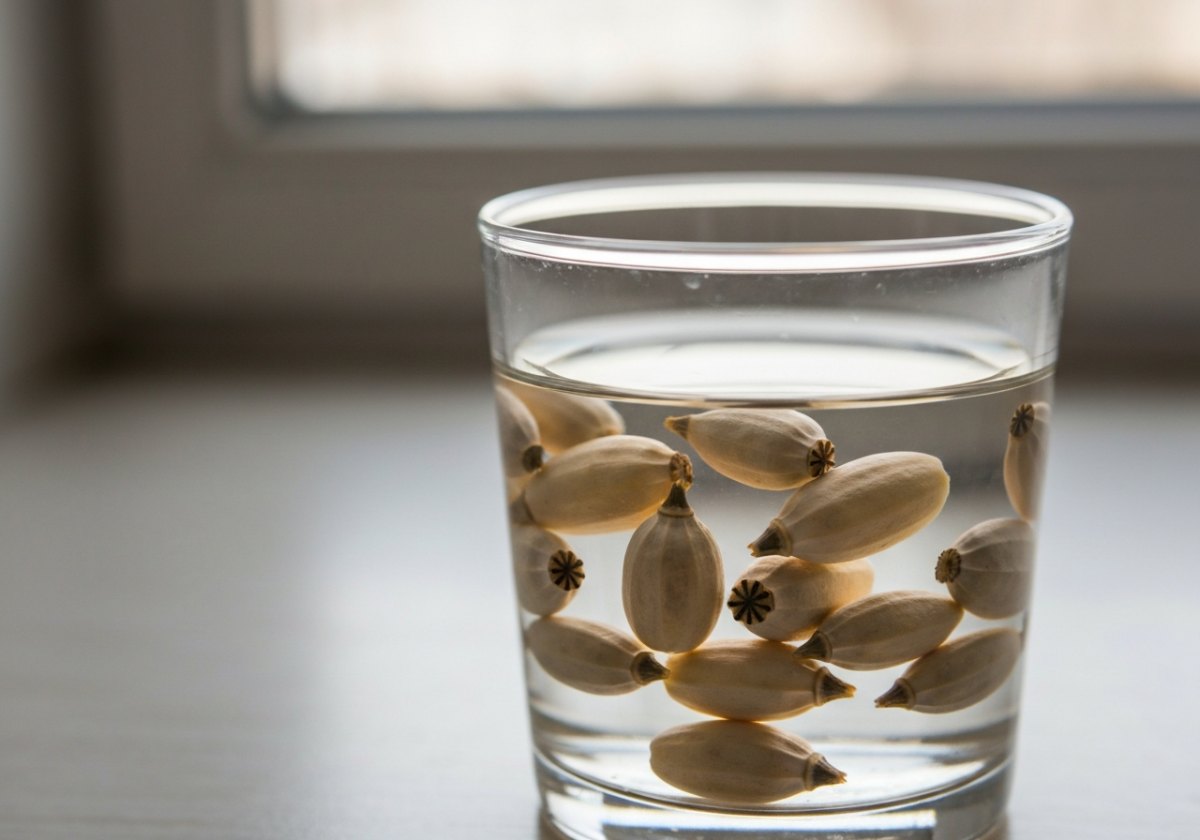
- Do a water-uptake test. Weigh (or simply observe) a few seeds, soak them for 24 hours, and check whether they swell. If they stay hard and dry inside, you have physical dormancy. If they imbibe water and swell but still will not germinate, the block is physiological or morphological.
- Cut a seed open under magnification. A full-sized embryo filling the seed points to physiological dormancy. A tiny embryo in a large endosperm points to morphological dormancy.
- Consider the origin climate. A seed from a cold-winter habitat almost certainly wants cold stratification; a seed from a Mediterranean or desert climate may want warmth, smoke, or a hard-coat treatment.
- Run a small control. Sow a few untreated seeds warm and moist as a baseline. If a portion germinate readily, dormancy may be shallow or absent for your particular seed lot.
A note on depth and freshness
Dormancy is not always fixed in intensity. Many seeds have *deep* dormancy when freshly shed and gradually lose it during dry storage — a process called after-ripening. This is why some notoriously difficult seeds germinate far more easily after a year in a paper envelope in a cool drawer, while others (many trees, most temperate wildflowers) are best sown fresh because their viability drops sharply with storage. Always note the harvest date, and where you can, learn whether your species prefers to be sown fresh or aged.
Nature does not hurry, yet everything is accomplished. A seed keeps its own calendar; the grower's task is simply to learn how to read it.— A gardening proverb
Where we go from here
You now have the conceptual map for the whole module. In the chapters that follow we will take each type in turn and cover the exact techniques: scarification methods and hot-water soaks for physical dormancy; cold and warm moist stratification protocols, with real timings and media, for physiological dormancy; patience-based warm incubation for morphological cases; sequenced treatments for the morphophysiological species; and specialist cues such as smoke, gibberellic acid, and leaching. As you work through them, keep returning to one question before you touch a single seed: *what signal is this seed waiting for?* Answer that honestly, and everything else in germination becomes a matter of technique rather than luck.