Why Seed Choice Is a Skill, Not a Shortcut
Every experienced grower has a graveyard of expensive, exotic seeds that never woke up. Most of the time the seeds were fine — the problem was a mismatch between the seed's demands and the grower's current skill, patience, and equipment. Choosing seeds for your level is the single most reliable way to build a track record of success, and success is what keeps you germinating long enough to become genuinely good at it.
In this chapter we group seeds into three tiers — Beginner, Intermediate, and Advanced — based not on how 'rare' or 'beautiful' the plant is, but on how forgiving the germination process is. A common tomato and a rare heirloom lettuce both belong at the beginner tier because they germinate fast, wide, and without special treatment. A tiny orchid seed with no food reserves belongs firmly at the advanced tier, no matter how cheap it is.
The Three Traits That Decide Difficulty
Before we list seeds, learn to read them. Almost every germination challenge comes down to three measurable traits. Once you can spot these on a seed packet or in a species description, you can rank almost any seed yourself.
- Speed and window. Easy seeds sprout in 5–14 days at 20–25 °C. Hard seeds can take 30–120 days, sometimes with erratic emergence over months, which tests your patience and your ability to keep conditions stable.
- Dormancy mechanisms. Some seeds germinate the moment they are moist and warm. Others require pre-treatments: cold-moist stratification (weeks at 1–5 °C), scarification (nicking or abrading a hard coat), light exposure, smoke, or precise temperature cycling. Each extra requirement raises the difficulty tier.
- Seed size and food reserves. Large seeds (beans, oaks, canna) carry generous reserves and tolerate mistakes. Dust-fine seeds (begonia, orchid, some carnivorous plants) have almost no reserves, dry out in minutes, and often need sterile technique.
Tier 1 — Beginner Seeds (Build Confidence)
These germinate quickly, need no pre-treatment, and forgive over- and under-watering. Start here even if you feel ambitious — you are training your eye, your watering hand, and your recordkeeping, not just growing a plant. Aim for a batch that emerges in 5–14 days at a steady 20–25 °C, sown roughly 0.5–1 cm deep in a light, moist (never soggy) mix.
- Tomato, chilli, and most Solanaceae (sow 0.5 cm, 22–26 °C, up in 6–12 days).
- Beans, peas, squash, sunflower — large seeds, very tolerant, sow 2–3 cm deep.
- Lettuce and most brassicas (note: lettuce prefers light, so barely cover it and keep it below 24 °C).
- Marigold, cosmos, zinnia — reliable annual flowers up in about a week.
- Basil and many soft herbs (surface-press, keep at 20–25 °C).
Tier 2 — Intermediate Seeds (Add One Technique)
Intermediate seeds ask you to master exactly one new skill: usually a single dormancy-breaking treatment or a longer, steadier germination window. The rule here is to change one variable at a time. Do not attempt a species that needs three treatments at once until each treatment is second nature on its own.
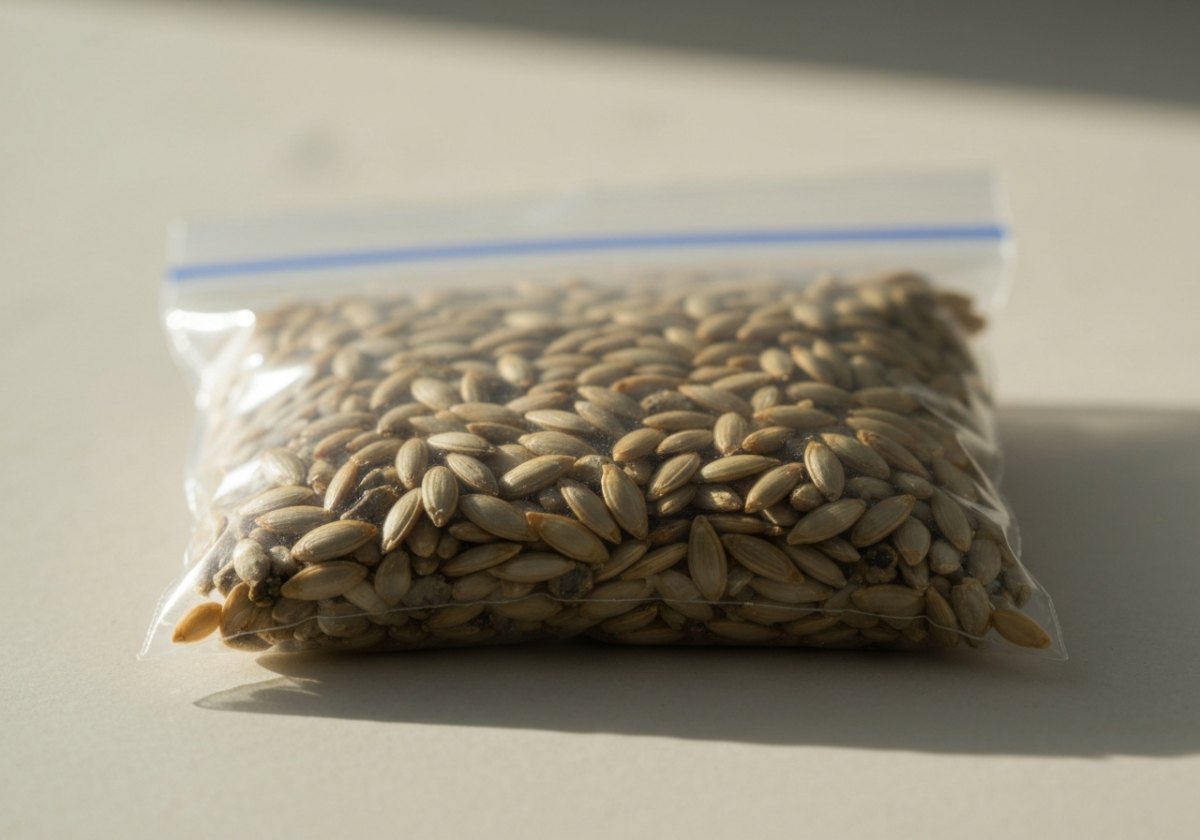
- Cold-moist stratification: many temperate perennials, lavender, some Acer (maples) — 4–8 weeks at 1–5 °C in a labelled zip bag with barely-moist vermiculite.
- Scarification: morning glory, sweet pea, Canna, lupins — nick the hard coat or soak 12–24 hours until seeds swell.
- Light-dependent surface sowing: foxglove, snapdragon, many campanulas — sow on the surface, do not cover, keep humid under a clear lid.
- Longer, patient warm germination: many peppers and eggplants (up to 21 days), some subtropical trees.
Tier 3 — Advanced Seeds (Systems and Sterility)
Advanced seeds combine multiple demands: stacked dormancies (cold, then warm, then cold again), months-long timelines, sterile technique, or dust-fine seed with no reserves. These reward growers who already keep records, control temperature reliably, and can hold their nerve for a season or more. Attempt them once you have a documented history of Tier 1 and Tier 2 successes.
- Orchids — dust-fine, near-zero reserves; typically need sterile flasking on nutrient agar.
- Peonies and some Trilliums — double dormancy needing a warm period then a cold period, often over 12+ months.
- Many alpine and ericaceous species — surface-sown, light-dependent, slow and mould-prone.
- Certain palms and hard-coated tropical trees — erratic emergence over 2–6 months at high, steady warmth (28–32 °C).
A Simple Method for Ranking Any New Seed
When a seed lands on your desk that isn't on any list, score it yourself. Give one point for each of these, then read the total.
- Does it need a pre-treatment (stratification, scarification, smoke)? +1 each.
- Is the germination window longer than 21 days? +1.
- Is the seed dust-fine or does it need surface light? +1.
- Does it need sterile technique? +2.
- Total 0 = beginner; 1–2 = intermediate; 3+ = advanced.
Closing: Match, Log, Then Level Up
There is no shame — and enormous long-term advantage — in starting easy. Growers who match seeds to their level accumulate real understanding of temperature, moisture, and timing that no shortcut can replace. Keep a simple log of species, treatment, sowing date, temperature, and emergence date for every batch. Within a couple of seasons you will have your own personal difficulty chart, tuned to your climate and your bench, and you'll be ready to take on the rare, slow, spectacular seeds with far better odds of a happy result.
The best germinator isn't the one with the rarest seeds — it's the one who chose the right seed for today, and wrote down what happened.— Quinta dos Ouriques University