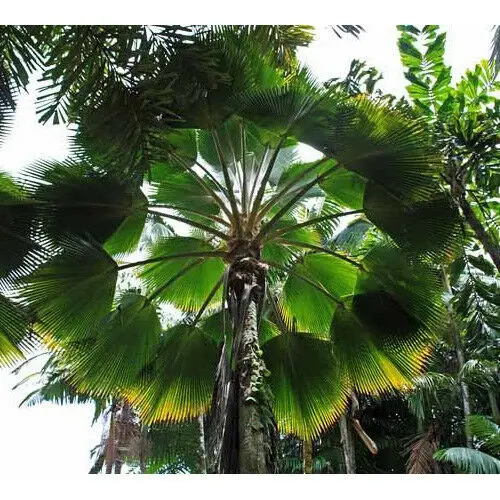
Serenoa repens, commonly called Saw Palmetto, is a slow-growing clump-forming palm native to the southeastern United States, valued for its medicinal berries and ornamental fan-shaped leaves. Seed germination is naturally slow and uneven due to an impermeable seed coat and endocarp; seeds typically require 6 weeks to 6 months to germinate. This species does not have dormancy requirements but demands high temperatures (30-35°C) and moisture for successful propagation.
Before sowing
Remove mesocarp (fleshy fruit material) completely; rinse thoroughly with water for 24 hours before imbibition to improve germination rate from 8% (unprocessed) to 50-61% (treated).
Sowing
What to expect
Tips
Use fresh seeds when possible; stored seeds are more difficult to germinate. Complete removal of fruit mesocarp is critical for germination success. Maintain stable moisture and consistent warmth throughout germination period. Seed with micropyle cap intact requires longer germination time; micropyle cap removal significantly accelerates germination. Seedling growth is remarkably slow even after emergence; provide 2 years minimum greenhouse cultivation before transplanting. Ensure excellent drainage to prevent fungal issues. Light requirements are minimal; germination occurs in darkness or low light. After germination, gradually acclimate seedlings to outdoor conditions before permanent planting.
Sources: USDA Forest Service Fire Effects Information System; Carpenter (1987) Temperature and Imbibition Effects on Seed Germination; Makus (2008) Seed Germination Methods in South Texas; Gardenia.net; University of Florida Plant Resources Center