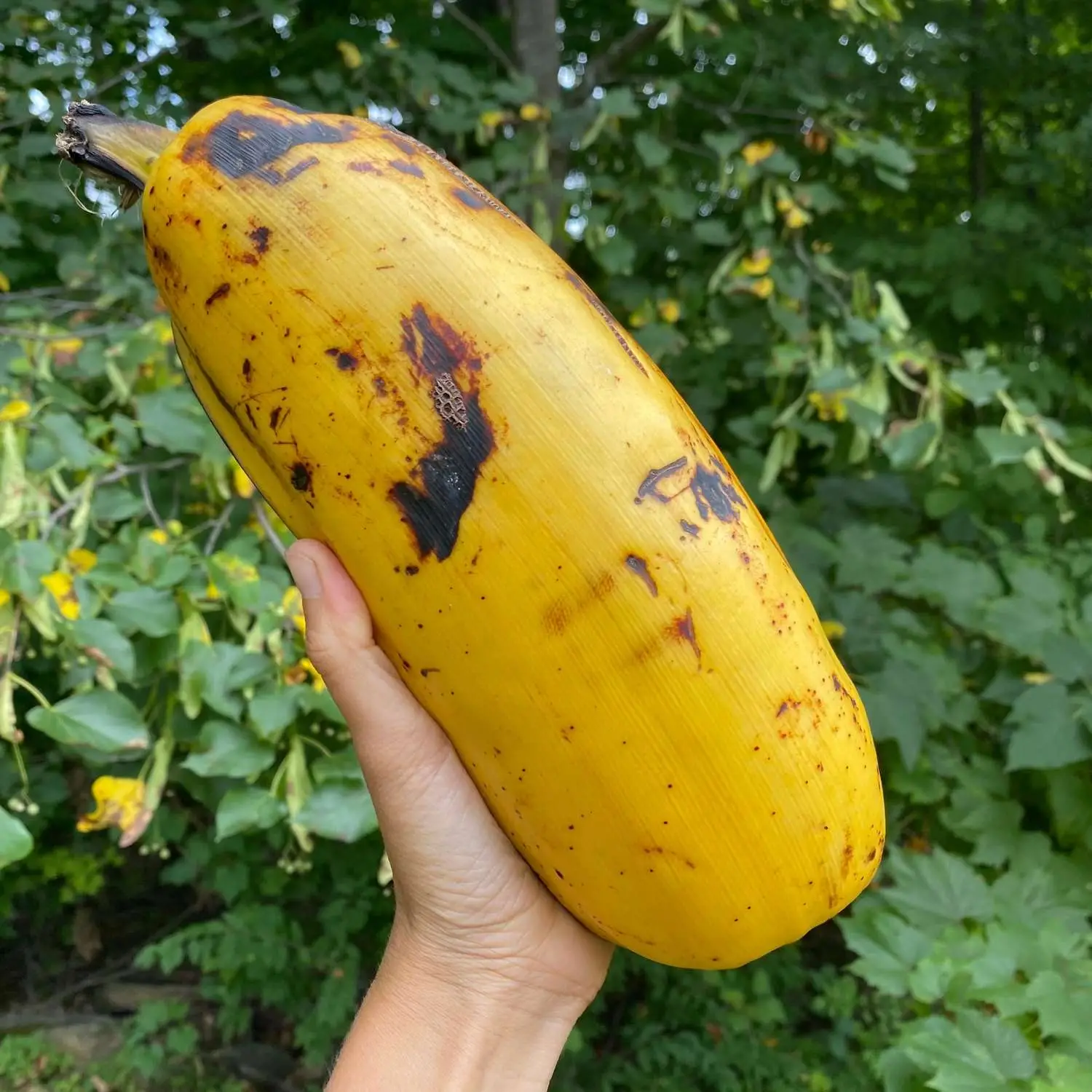

Musa species (bananas) are tropical herbaceous plants native to the Indomalayan region and parts of northeast Australasia. Banana seeds have a hard, impermeable seed coat and exhibit physiological dormancy, requiring careful preparation and consistent warm conditions with temperature fluctuations to germinate. Germination is notoriously slow and unpredictable, typically taking 4 weeks to 6 months or longer.
Before sowing
Seeds should be clean and free of fruit pulp. Seeds benefit from warm water imbibition prior to sowing
Sowing
What to expect
Tips
Keep substrate consistently moist but never waterlogged to prevent seed rot. Remove plastic cover every 2-3 days for air circulation to prevent mold. Observe weekly for white root development. Once germinated, transplant fragile seedlings to individual pots with well-draining substrate. Provide bright, indirect light (not direct sun) after sprouting. Maintain warm temperatures (minimum 20°C/68°F) and high humidity (80-90%) throughout germination. Be extremely patient—some seeds may germinate within weeks while others take several months. Germination rates vary considerably by variety and seed maturity. Fertilize seedlings at approximately 4 weeks old with dilute liquid fertilizer. After 3-4 weeks, seedlings develop lateral roots and become independent from endosperm reserves.
Sources: ProMusa (banana seed physiology and germination), Cambridge University Press (Musa acuminata germination studies), Wikipedia (Musa genus distribution), scientific literature on banana seed dormancy and temperature requirements