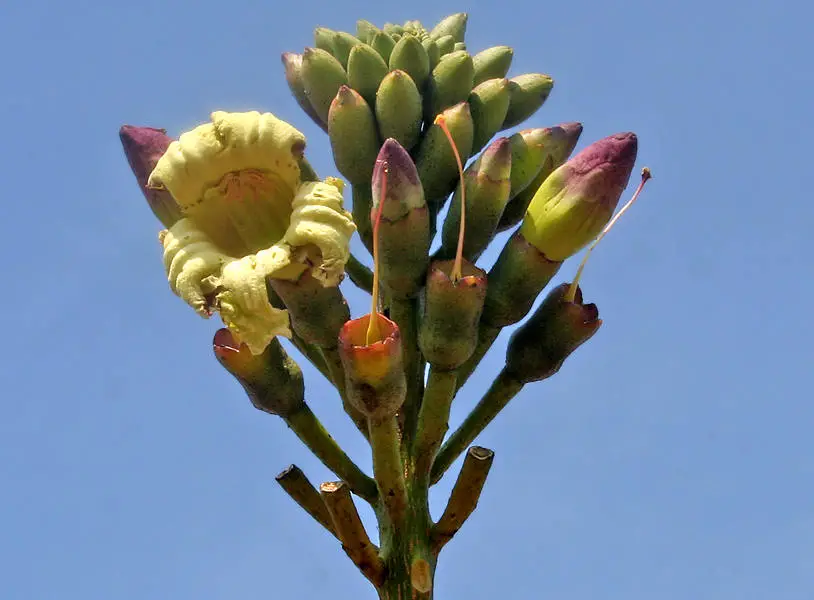
Aloe pluridens, commonly called French Aloe, is an attractive tree-like succulent native to coastal regions of South Africa, characterized by tall slender stems and large rosettes of gracefully recurved, pale-green leaves with distinctive white teeth along the margins. This species germinates readily and is relatively easy to grow from seed, making it an excellent choice for both novice and experienced gardeners seeking to establish this striking architectural plant.
Before sowing
No pre-treatment needed — sow directly.
Cold moist stratification for 8-12 weeks; seeds must not dry out before sowing.
Sowing
What to expect
Tips
Sow seeds in spring-summer on well-draining succulent mix. Seeds should be placed on the surface and only lightly covered. Maintain bright light and warm temperatures (21-32°C, ideally 27°C) for optimal germination. Water moderately to keep substrate moist but not waterlogged during germination—overwatering will cause fatal root rot. Once seedlings establish their first leaves, gradually reduce watering frequency. Provide bright, indirect light; seedlings tolerate shade but benefit from increasing light intensity. Excellent drainage is absolutely critical as aloes are particularly susceptible to root rot. After 4-6 weeks of growth, transplant healthy seedlings into individual small pots with cactus or succulent mix. Continue semi-shade conditions for young plants and gradually acclimate them to brighter light over several weeks.
Sources
Backyardgardener.com, Gardenia.net, PlantZAfrica.org, Garden Aloes database, Royal Botanic Gardens Kew