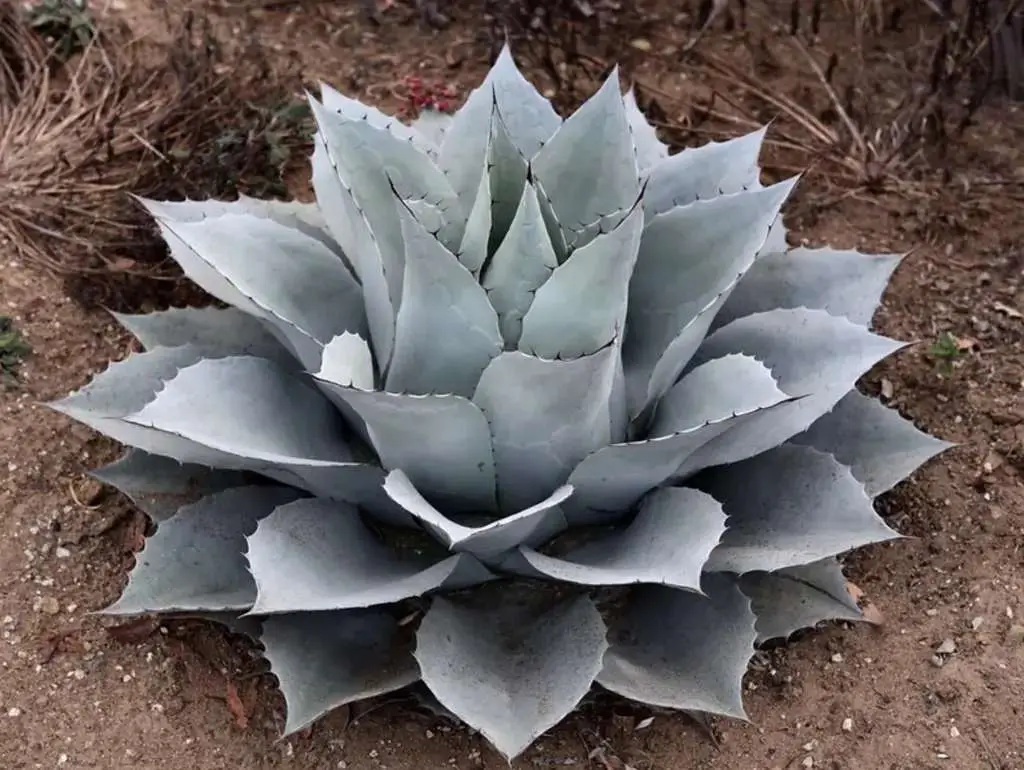
Agave victoriae-reginae, commonly known as Queen Victoria agave or royal agave, is a slow-growing, compact succulent native to the Chihuahuan Desert in northeastern Mexico. This species is prized for its striking geometric rosette form with dark green leaves featuring white margins and is considered one of the most beautiful and desirable agaves. Seeds germinate readily in warm conditions with consistent moisture, typically producing the first leaf within 2-6 weeks, making seed propagation accessible for most growers.
Before sowing
No pre-treatment needed — sow directly.
Sowing
What to expect
Tips
Maintain consistent moisture during germination but avoid waterlogging—keep soil slightly moist, not wet. Cover container with plastic to retain heat and humidity. Once germination begins, provide bright indirect light and avoid direct sunlight for the first 2 weeks. Remove humidity cover after 2-3 weeks when seedlings emerge. Sterilize substrate before use to prevent fungal issues. Space seeds at least 1 cm apart. After seedlings develop their first true leaves, begin very gradual acclimatization to drier conditions to mimic the adult plant's drought tolerance. Use a heat mat set to 75-79°F if ambient temperature is below 21°C. Excellent drainage is critical—agaves are particularly susceptible to root rot in poorly draining conditions.
Sources: rareplant.me, ferriseeds.com, apps.cals.arizona.edu (University of Arizona Arboretum), worldofsucculents.com, plantcaretoday.com, smartseedsemporium.com, gardenershq.com, missouribotanicalgarden.org